

Discover the Treasures of Iran
Tabatabaei House
Qajar courtyard house of stained glass, stucco and windcatchers.

- Attractions
- Tabatabaei House
Tabatabaei House is a Qajar-period residence in Kashan, Iran, beside the Imamzadah Sultan Amir Ahmad shrine. Archnet records an inscription dated 1298 AH / 1881 CE; this dates the inscription rather than necessarily establishing when the whole house was built. Iran’s tourism authority associates the residence with Hajj Sayyed Ja‘far Tabatabaei, a merchant from Natanz who settled in Kashan.
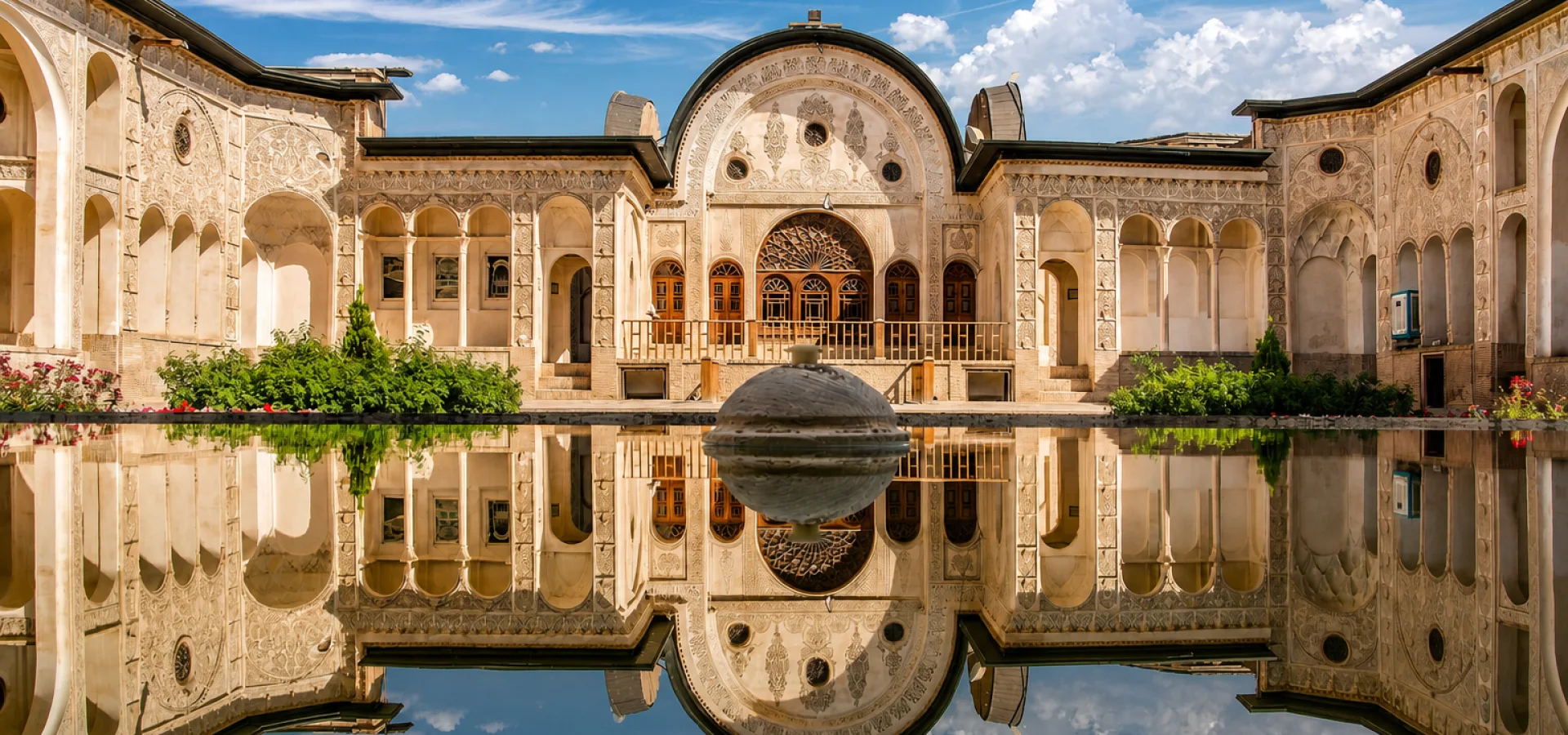
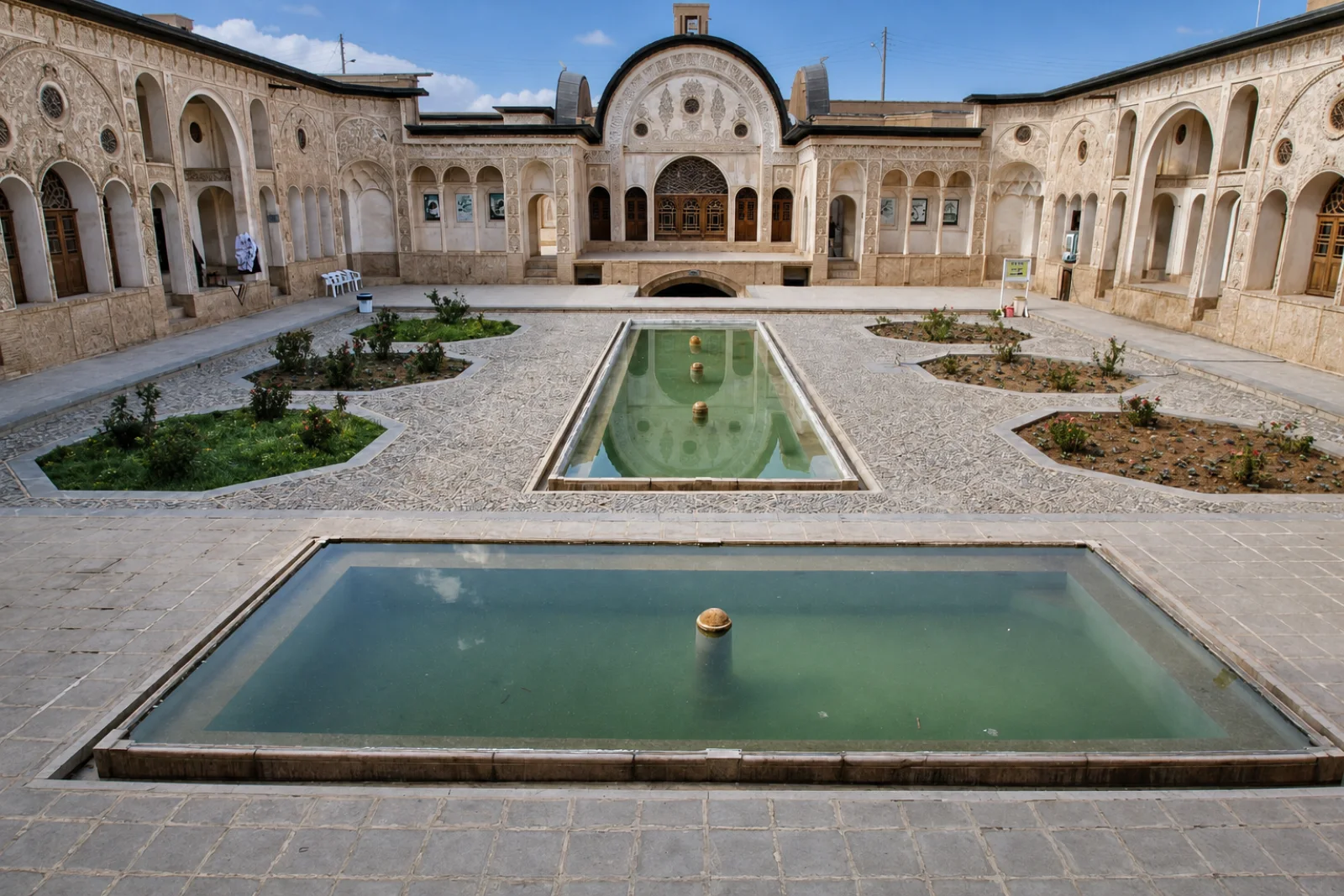
The central rectangular courtyard provides the clearest introduction to the house’s architecture. Pools and six octagonal planting beds organise the open space, while the southeastern hall presents a two-storey iwan with three arches. Look upwards here for the geometric ornamental vaulting known as kar-bandi. Coloured glazing, painting, mirrorwork and stucco enrich the principal reception room, giving the interiors a different visual character from the courtyard’s more ordered composition.
The distinction between biruni, the reception quarters, and andaruni, the private domestic quarters, helps explain how hospitality and household privacy shaped the residence. Service areas formed another part of this domestic organisation. Windcatchers and basements also reflect the demands of Kashan’s climate: the tourism account describes air being channelled into the lower rooms. Together, these spaces offer a way to read the house as both a setting for receiving guests and a carefully arranged home. Current opening hours, admission charges and access arrangements require confirmation before visiting.
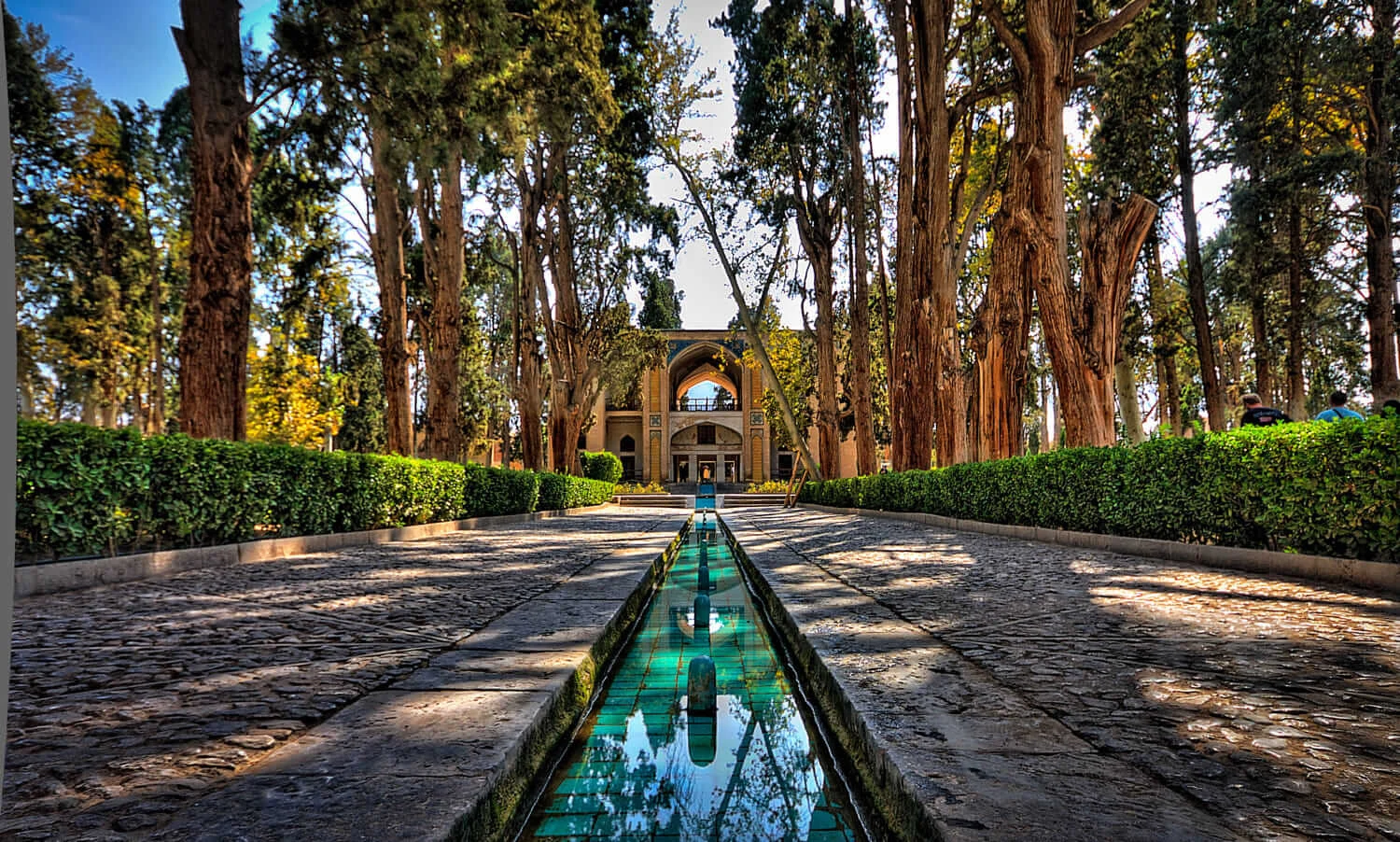
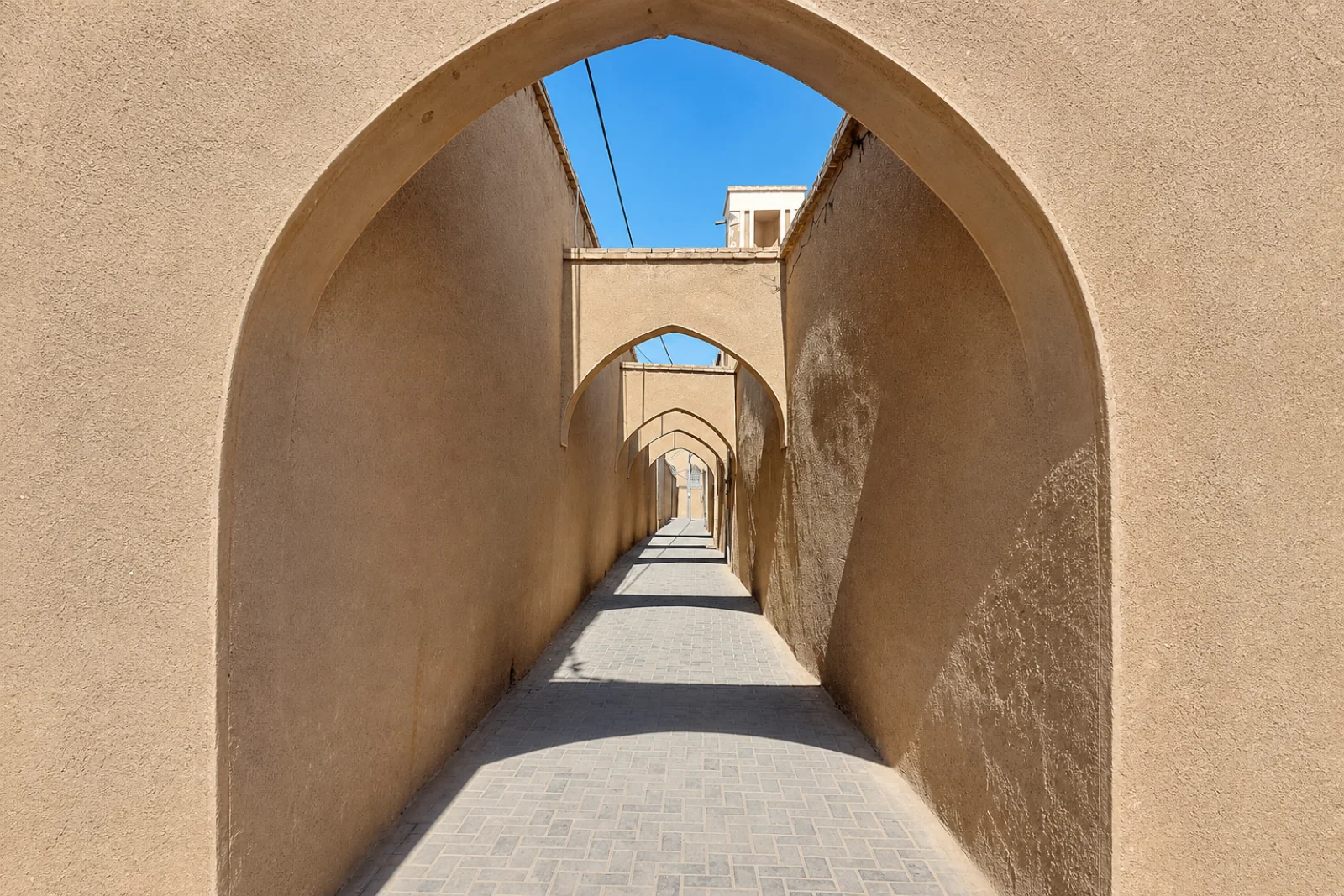
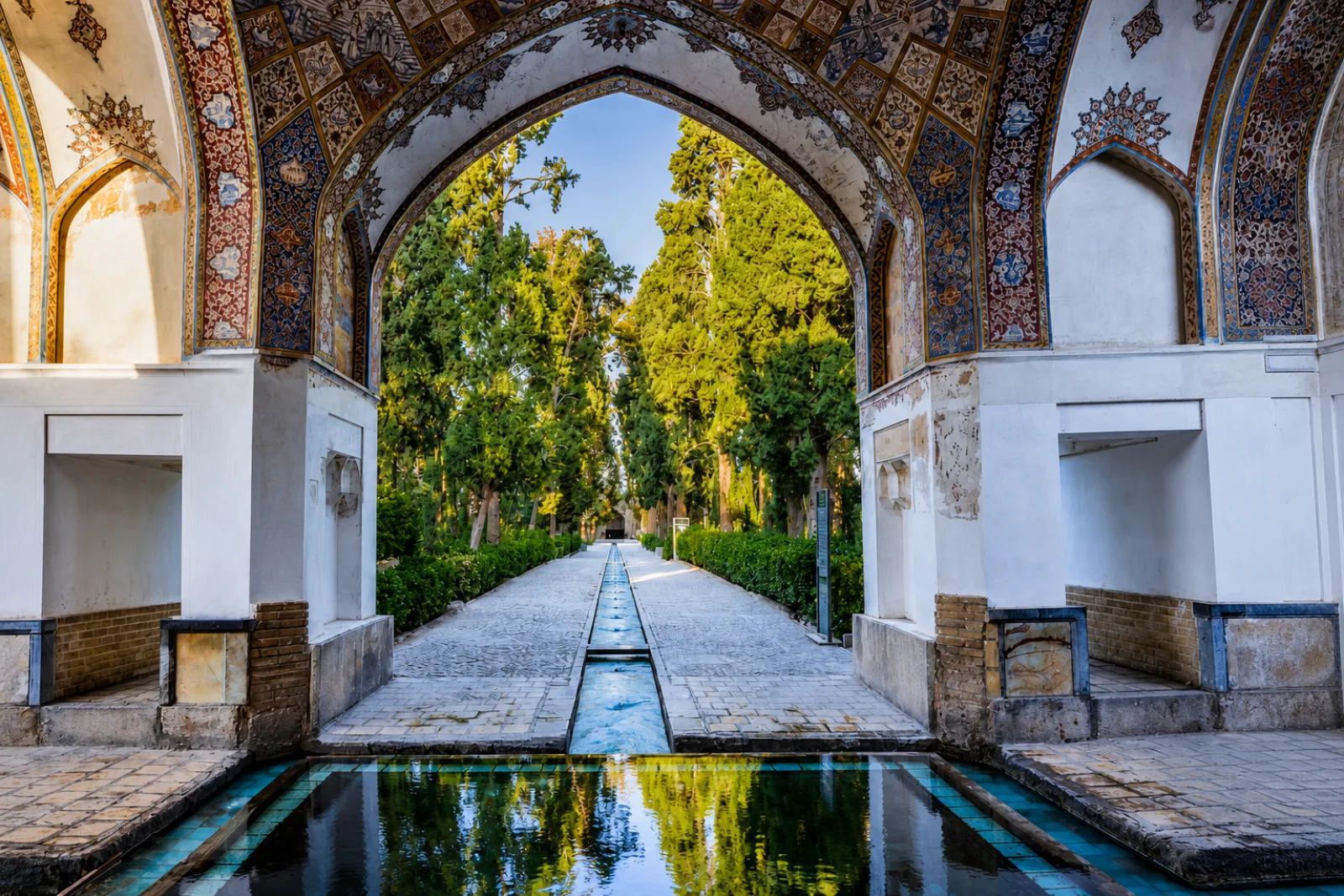
A Glimpse Into Tabatabaei House
See Tabatabaei House Through Moments
Visitor Information
Essential Information for Visiting Tabatabaei House
Allow time to move slowly between the courtyard and the main reception spaces: details such as coloured glazing, fine stucco and mirrorwork are easiest to appreciate when your eyes adjust.
Look for the house’s Qajar-period composition around a central rectangular courtyard with pools and planting beds, and a prominent iwan with multiple arches; these features help you read how the spaces were arranged for formal reception versus private life.
In hot weather, ask whether lower-level rooms or basements are open, as traditional houses in Kashan often use deeper spaces and windcatchers for cooler air—availability can vary by management and conservation needs.
Opening hours, ticketing and any on-site rules can change; confirm current arrangements locally (or through your accommodation) before you set out, especially on holidays.
Signature Tours including Tabatabaei House
We Believe Your Journey Through Tabatabaei House Should Be Personal.
No results found.
Frequently Asked Questions about Tabatabaei House and Nearby Attractions
For a sightseeing-focused stay in Kashan, look for accommodation in or near the historic centre, particularly around the traditional houses and Sultan Amir Ahmad Bathhouse. This area puts several major sights within a manageable walking circuit, while the bazaar is another useful landmark when comparing locations.
Restored courtyard houses offer an atmospheric base, but room layouts and access vary considerably. Before booking, ask about stairs, private bathrooms, heating or air conditioning, and whether your room faces a shared courtyard where conversation may carry.
The old quarter’s narrow lanes can make the final approach with luggage less straightforward than a map suggests. Ask your accommodation for the nearest vehicle-accessible drop-off point and clear arrival directions, especially if you expect to arrive after dark.
A central address does not put every attraction within comfortable walking distance: plan on separate transport for Fin Garden. If you are driving, confirm parking arrangements rather than assuming a historic property has spaces on-site.
Spring and autumn generally offer the most comfortable conditions for exploring Kashan’s historic houses, bazaar, and gardens. Days are usually milder than in summer, although temperatures can vary considerably between sunny afternoons and cool evenings, so pack layers and comfortable walking shoes.
If rose harvesting and rosewater production are a priority, consider a spring visit with an excursion to nearby Qamsar or Niasar. The season often falls around late April and May, but weather affects the timing; check with a local guide or your accommodation before planning around a particular harvest or demonstration. This can also be a busy period, especially on weekends and holidays, so arranging accommodation ahead is sensible.
Summer can be intensely hot, making early outdoor visits and shaded or indoor stops later in the day a more practical approach. Winter may suit travelers who prefer cooler sightseeing weather, but bring warm clothing for cold mornings and evenings, particularly if you plan excursions beyond the city.
Two full days is a practical starting point for a first visit to Kashan. That gives you time for its historic houses, bazaar, and gardens without turning every stop into a checklist; one day works if you are comfortable choosing only a few highlights.
Spend your first day exploring the old city, grouping nearby sights such as the Tabatabaei and Borujerdi historic houses with the Sultan Amir Ahmad Bathhouse. Leave time for the bazaar and its Timcheh Amin al-Dowleh, where the architecture rewards a slower look. Walking is useful within the historic quarter, although uneven lanes and exposed stretches can make comfortable shoes and water important.
Use your second day for Fin Garden, which sits away from the main cluster of old-city sights, then return for places you missed or a quieter café break. A taxi can simplify the garden visit; agree on the fare or booking arrangement before setting off. Confirm current access and visiting arrangements locally, especially around holidays.
Add another day if you want an excursion to Abyaneh or the surrounding desert rather than squeezing it into your city sightseeing. In hotter months, plan outdoor wandering for earlier or later in the day and keep the middle of the day flexible.
Kashan’s historic center is well suited to exploring on foot, especially around its traditional houses, Sultan Amir Ahmad Bathhouse, and the bazaar. These sights can be grouped into walking routes, although winding lanes and similar-looking alleys make an offline map useful.
Use taxis for places farther from the historic core, particularly Fin Garden, or when heat makes walking uncomfortable. If your accommodation is inside the old town, ask staff to identify a nearby vehicle-accessible pickup point, since cars cannot conveniently reach every narrow lane.
Wear comfortable shoes for uneven paving, carry drinking water, and avoid planning long exposed walks during the hottest part of the day. Agree on the fare before starting a taxi ride, and ask your accommodation to help arrange the return journey if you are heading somewhere less central.
Kashan’s historic merchant houses share sunken courtyards, elaborate reception rooms, and designs adapted to the desert climate, but each offers a different emphasis. The Tabatabaei House is a strong starting point for its balanced courtyard views, intricate plasterwork, and decorative windows; it gives a clear introduction to the city’s grand domestic architecture.
The Borujerdi House is particularly rewarding if you enjoy dramatic rooflines, windcatchers, and richly decorated interiors. The Abbasi House offers a more complex arrangement of courtyards and spaces on different levels, making it a useful contrast if you are interested in how a large household was organized.
Rather than treating every house as essential, choose one for a focused visit or pair two to compare their layouts and decoration. Look for the contrast between public reception areas and more private spaces, and ask locally about current access before setting out, as restoration work can affect which rooms are open.
Kashan’s historic bazaar is both a working market and an architectural highlight, with covered passages, small courtyards, and traditional trading spaces. Look for Timcheh Amin al-Dowleh, an ornate, domed trading hall that rewards a pause to study its brickwork and geometric detailing.
Visit when shops are trading if you want to experience the market’s everyday atmosphere, rather than expecting every passage to be busy throughout the day. Activity can vary around midday, Fridays, and religious holidays, so ask your accommodation about current patterns before setting out. Allow time to wander beyond the main passage, but ask permission before entering workshops or photographing shopkeepers.
Rosewater, herbal distillates, textiles, and carpets are among the goods you may encounter. Compare quality and prices across several shops; for rosewater, ask whether it is intended for culinary or cosmetic use and check the packaging for travel. Bargaining may be appropriate for some purchases, especially carpets, but do not assume every price is negotiable or feel obliged to buy after browsing.
Fin Garden is worth visiting if you want to understand Persian garden design beyond its decorative appearance. Part of the UNESCO-listed Persian Garden ensemble, it combines flowing water, mature trees, pavilions, and a carefully ordered layout. The main appeal is the relationship between these elements, rather than a single landmark or viewpoint.
Look closely at how channels and pools organize the space and connect the garden’s buildings. The historic bathhouse adds a darker chapter: it is associated with the killing of Amir Kabir, a prominent reforming statesman of the Qajar period. Reading a little background beforehand, or visiting with a knowledgeable guide, makes this part of the site more meaningful.
Fin Garden sits outside Kashan’s historic center, so treat it as a separate outing rather than a quick detour between old-town sights. Wear comfortable shoes and bring drinking water; tree cover does not eliminate the heat. Confirm current access arrangements locally, particularly if seeing specific interiors is important to you.
Kashan is a useful base for excursions to the Maranjab Desert, near Aran va Bidgol, where dunes, salt-flat scenery, and a historic caravanserai offer a contrast to the city. These are separate stops rather than one compact attraction, so ask which locations an outing includes and how much time you will spend driving versus exploring.
Choose a local operator or driver experienced with the proposed route, particularly if it leaves paved roads. Before booking, clarify the vehicle, seat belts, walking distances, meals, water, and expected return time; also ask whether any local access arrangements are needed. Do not assume a standard city taxi is suitable for desert tracks.
Bring drinking water, sun protection, closed shoes, and an extra layer for cooler conditions after sunset. Wind, heat, and recent rain can affect routes and visibility, so confirm conditions locally and remain flexible about the itinerary. Avoid driving onto salt flats independently: apparently firm surfaces can conceal soft ground, and mobile reception may be unreliable away from settlements.