Destinations of Iran
Hamedan Uncovered
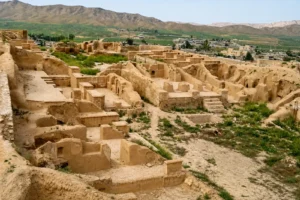
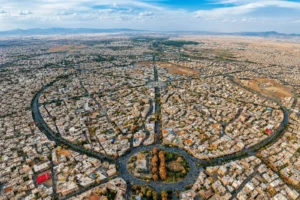
Hamedan occupies a central place in Iran’s history through its association with ancient Ecbatana, traditionally identified as the capital of the Medes and later an important Achaemenid royal centre. At Hegmataneh, excavated remains reveal successive layers of urban settlement, although attributing particular structures to the Median period remains debated. The site is best understood as evidence of a long, changing city rather than a single imperial moment.
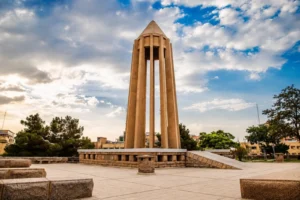
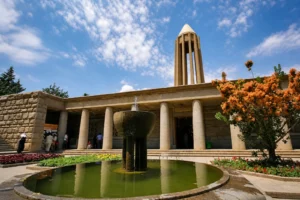
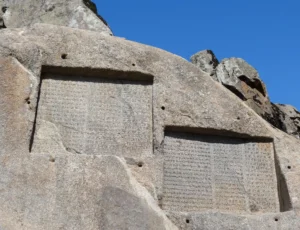
On the slopes of Mount Alvand, the Ganjnameh inscriptions preserve royal texts commissioned by Darius I and Xerxes I in Old Persian, Elamite and Babylonian. Within Hamedan, the modern Avicenna Mausoleum commemorates the physician and philosopher whose writings shaped medicine and intellectual life far beyond Iran. Its columned tower draws on the form of Gonbad-e Qabus, connecting twentieth-century commemorative architecture with an earlier Iranian monument.
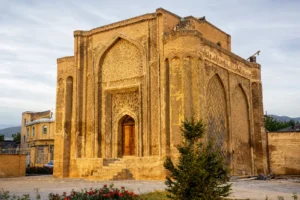
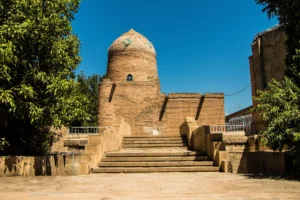
The mausoleum of Baba Taher honours a poet remembered for his vernacular quatrains, while the traditional tomb of Esther and Mordechai reflects Hamedan’s Jewish heritage. Together, these places invite visitors to read the city through imperial history, scholarship, poetry and religious memory.
- Walk around the idea of ancient Ecbatana at Hegmataneh archaeological site.
- Visit Avicenna's mausoleum and museum, linked to Iran’s renowned physician-philosopher.
- Pay respects at Baba Taher mausoleum, connecting you with Persian mystical poetry.
- See the Achaemenid-era Ganjnameh rock inscriptions in the Alvand Mountains foothills.
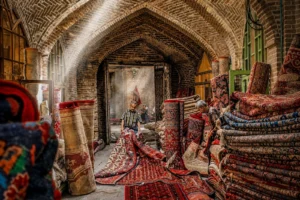
- Explore the traditional bazaar lanes and caravanserai spaces, still shaping the city’s core.
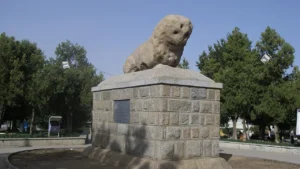
- Notice Shir-e Sangi, the stone lion statue, a local symbol of Hamedan’s past.
Hamedan’s setting at the foot of Mount Alvand gives it a highland climate, not the desert conditions sometimes assumed of Iran. Winters are cold, with snow and frost; summers are generally more comfortable than in Iran’s hotter lowland cities, though sunshine still calls for sun protection. Traditionally identified with ancient Ecbatana, Hamedan was a royal centre of the Medes and later Persian empires.
Spring brings milder days but changeable weather, so layers and a waterproof outer layer are sensible for outdoor visits. Summer suits longer walks, with an extra layer useful for cooler evenings. Autumn becomes progressively colder, especially towards winter. Snow and ice can complicate winter journeys into the surrounding mountains; confirm current conditions before setting out. For Hegmataneh and other historical sites, confirm seasonal opening arrangements locally.
For access, Tehran is a practical gateway for an onward journey by road; Kermanshah provides another overland approach from western Iran. Current coach services and any proposed air or rail connections require confirmation before travel.
Hamedan is widely identified with ancient Ecbatana, a centre of Median power that later served as an Achaemenid royal residence. This gives the city a significant place in the history of Iranian statehood, well before the Islamic period. The archaeological remains at Hegmataneh offer a starting point for exploring that past, while the tombs of Avicenna and the poet Baba Taher connect Hamedan with Iran’s intellectual and literary traditions.
Explore Hamedan
Attractions and Must-See Places in Hamedan
Find Your Way Around Hamedan
Signature Tours including Hamedan
We believe your journey through Hamedan should be immersive and deeply personal.
No results found.