

Discover the Treasures of Iran
Ganjnameh
Royal voices in mountain stone
- Attractions
- Ganjnameh
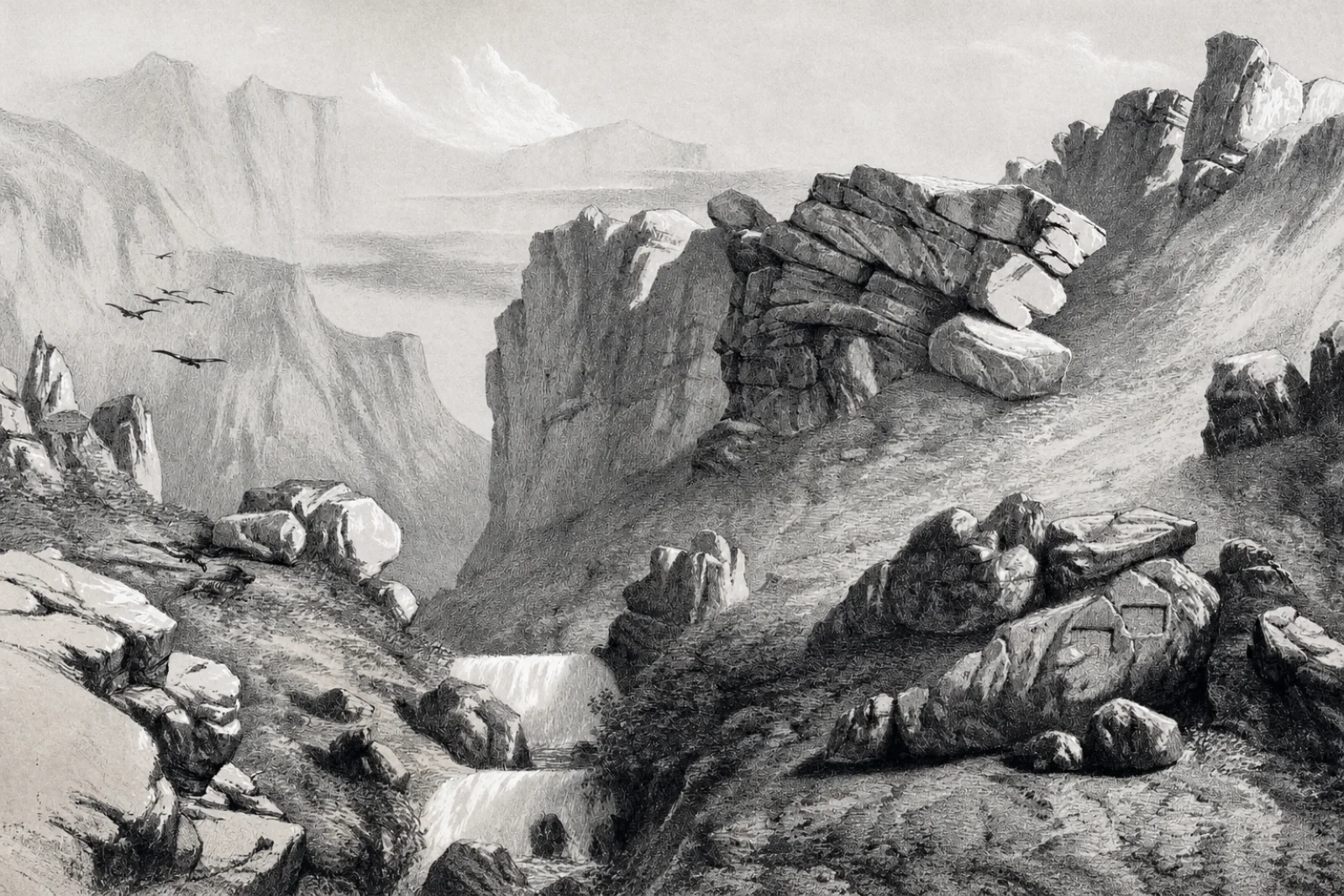
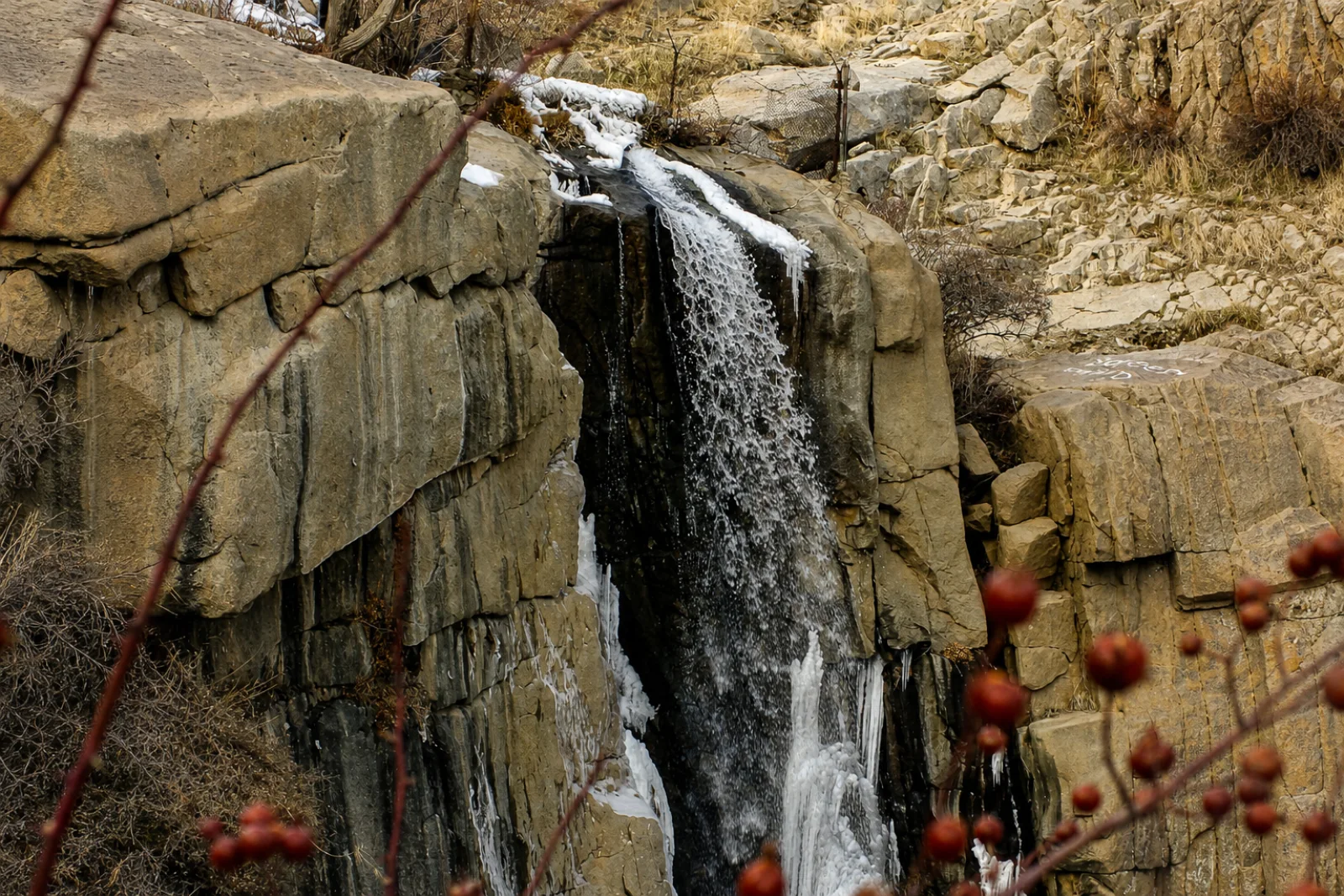
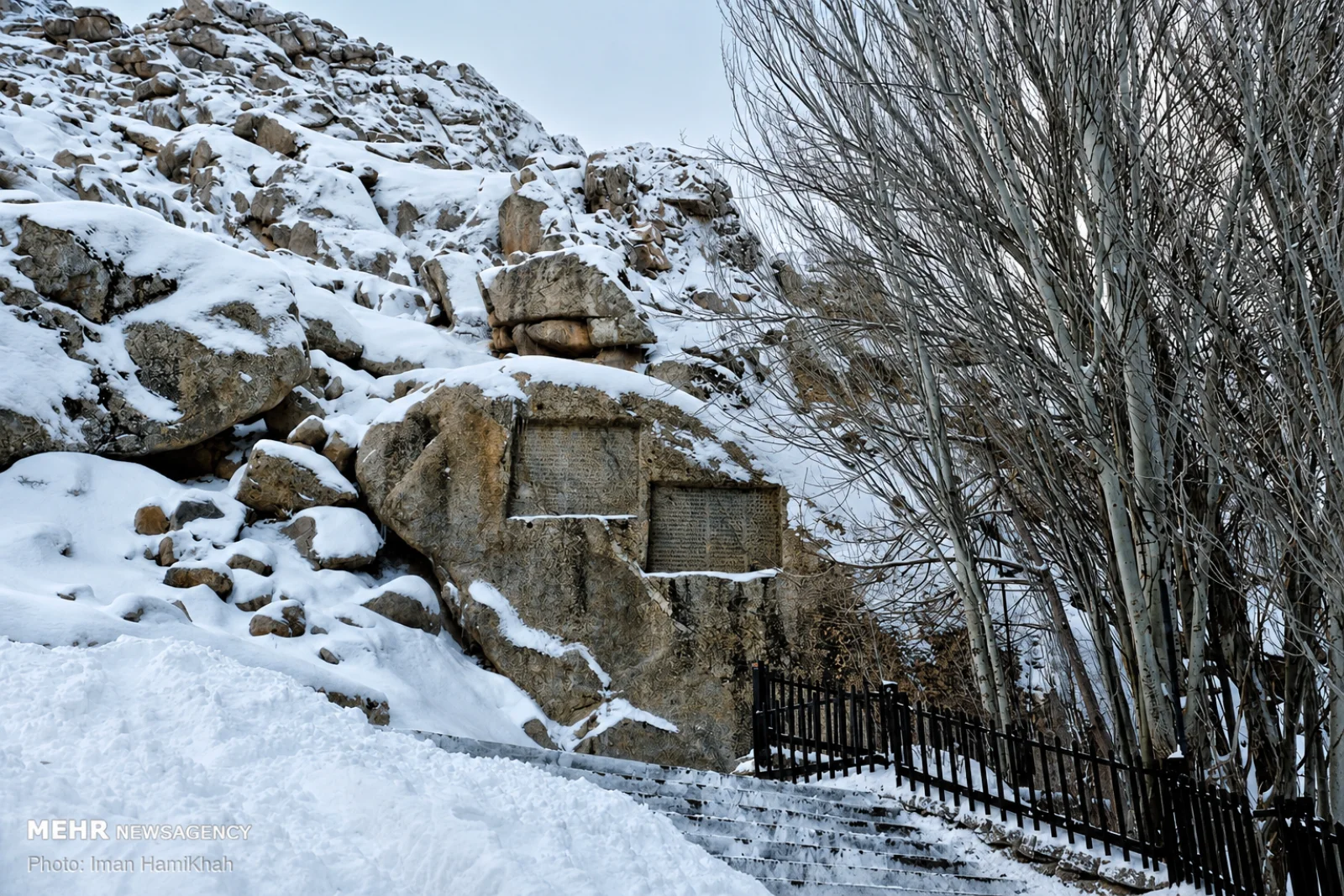
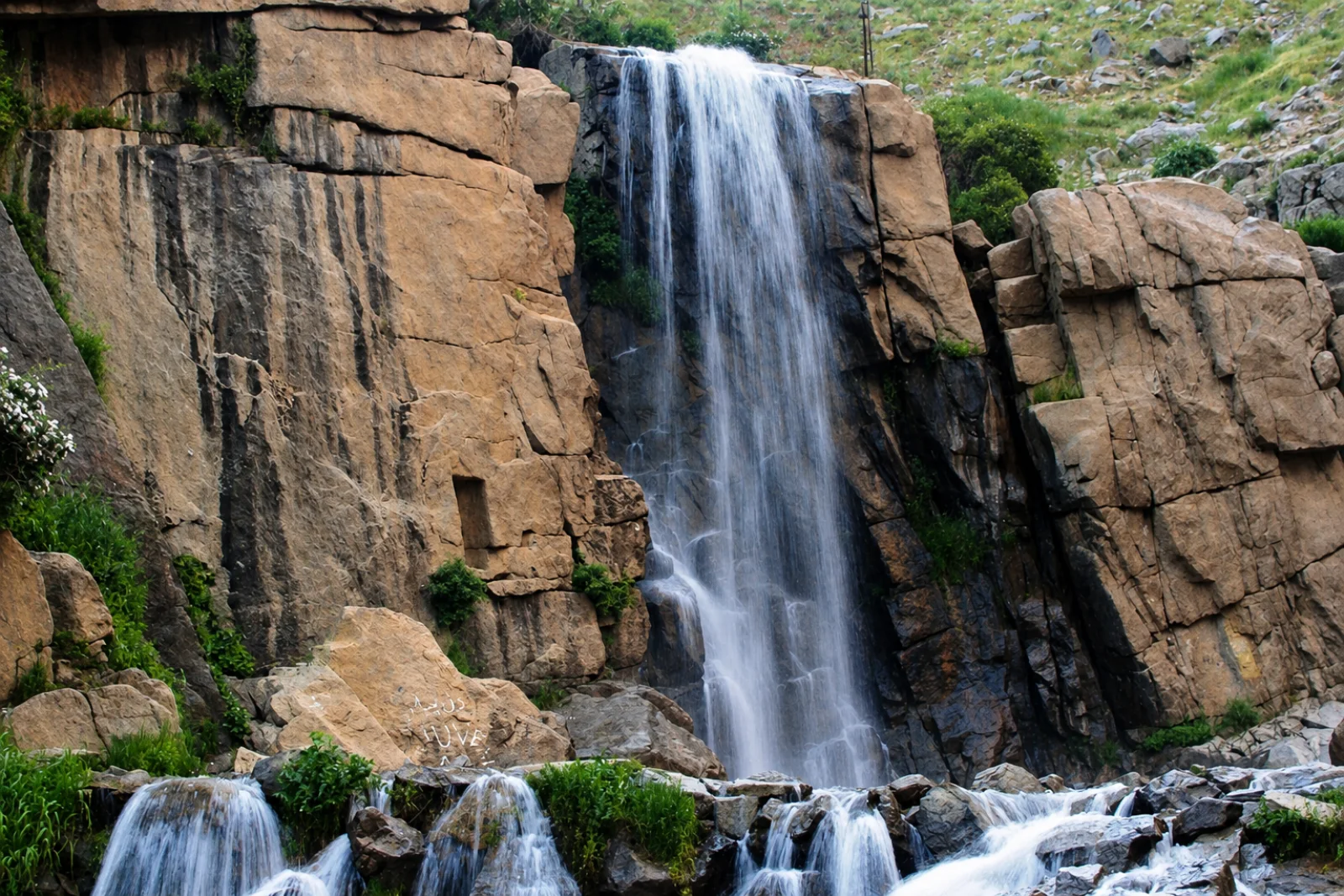
Ganjnameh, near Hamadan in western Iran, consists of two Achaemenid royal inscriptions carved into a rock face on Mount Alvand. The monument lies approximately 12 km southwest of Hamadan, in a mountain pass leading towards Tuyserkan; this is a geographical approximation rather than a driving distance. A nearby waterfall in Abbas Abad Valley places the inscriptions within a mountain landscape rather than an enclosed museum setting.
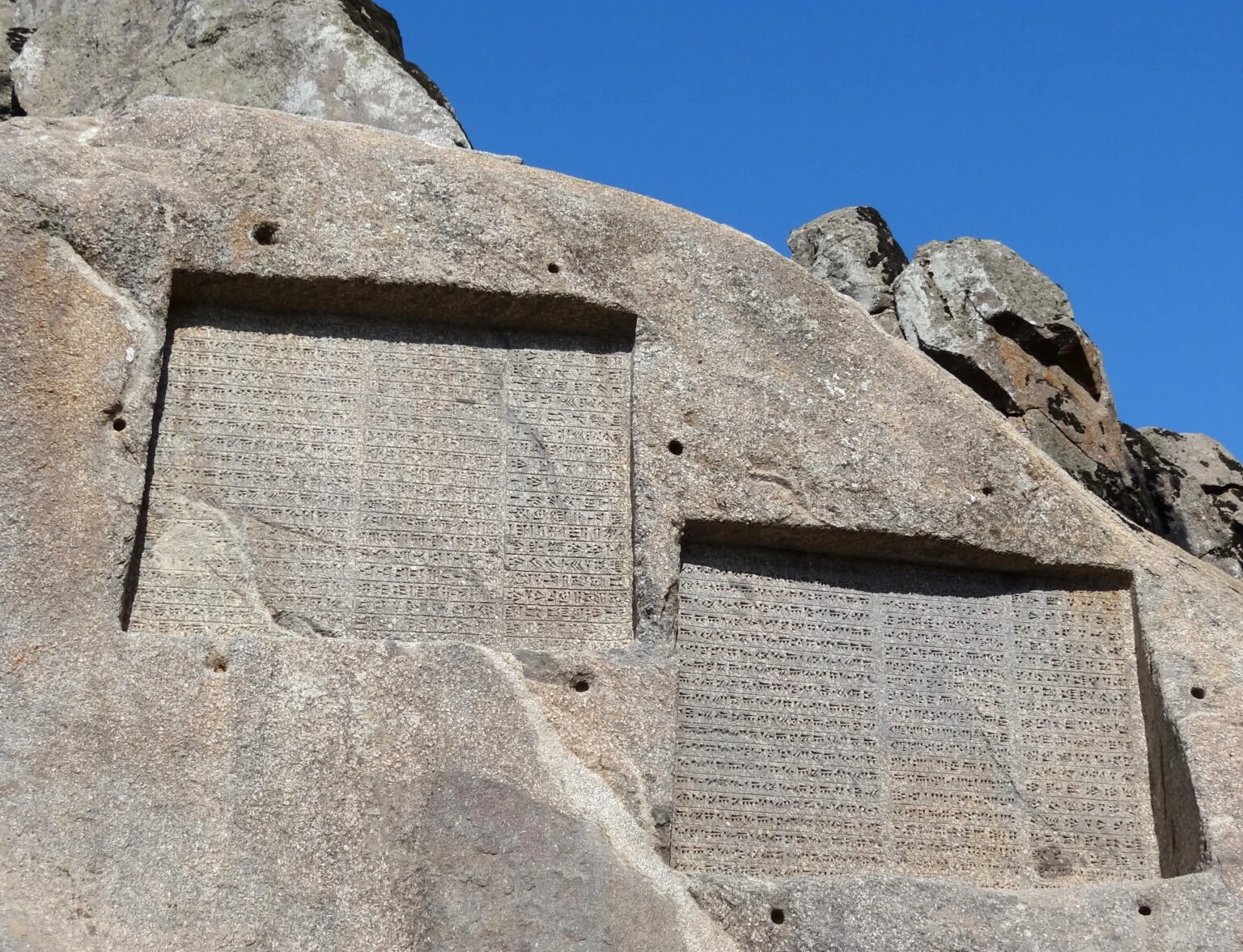
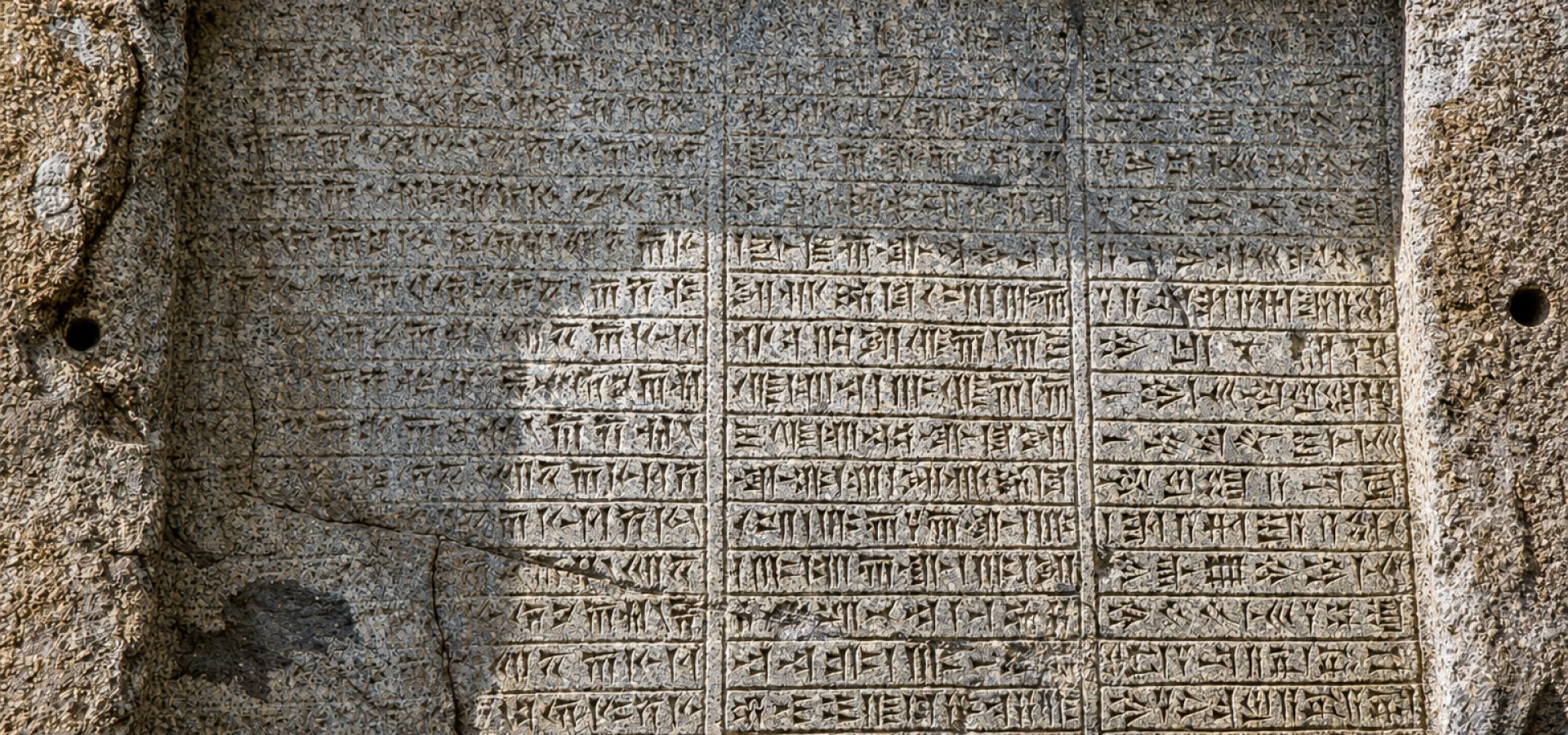
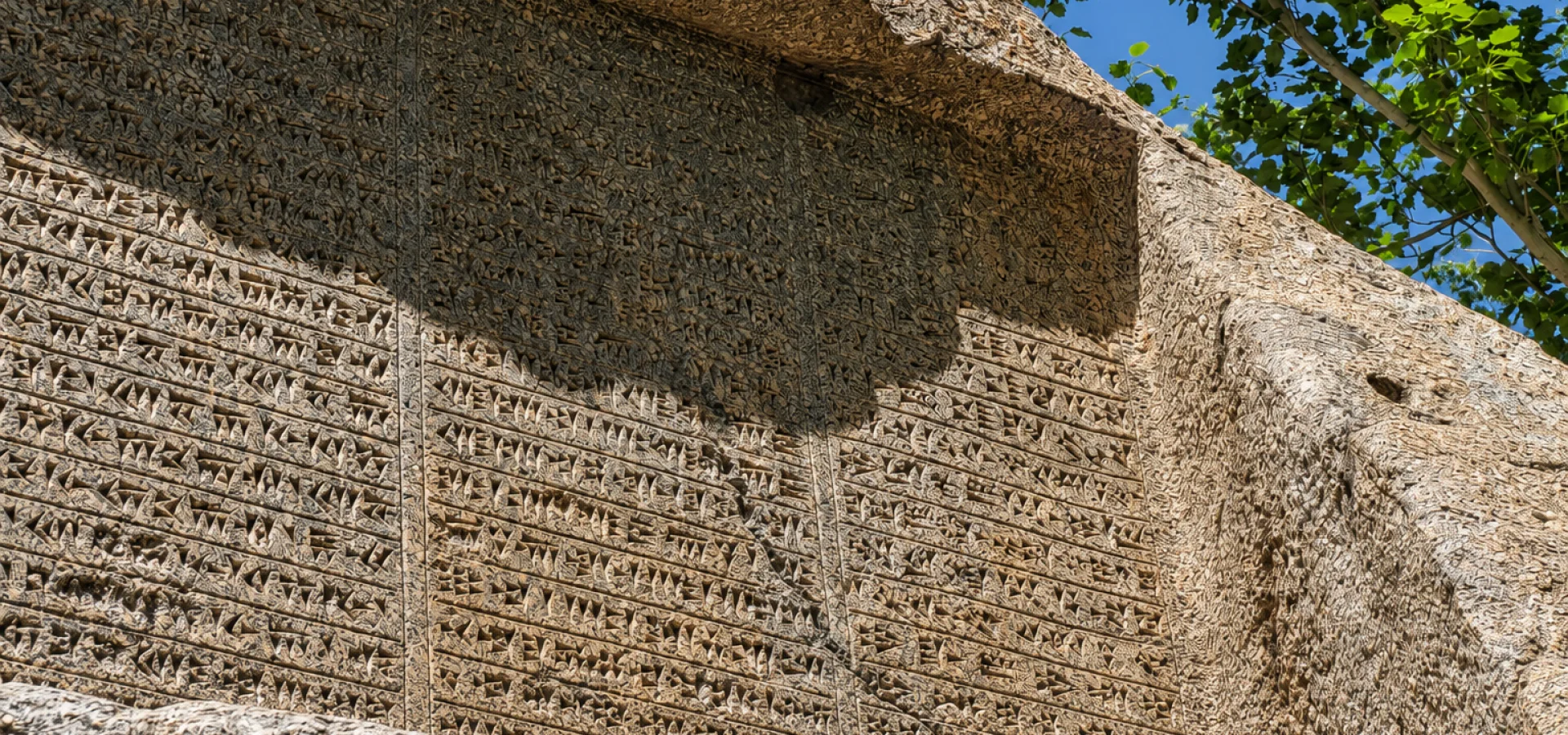
Commissioned by Darius I and Xerxes I, the inscriptions each occupy a panel approximately 2 × 3 metres on a vertically cut rock face. Darius’s panel sits to the upper left, with Xerxes’s lower and to the right. Both carry trilingual cuneiform texts in Old Persian, Neo-Elamite and Neo-Babylonian. Their subject is royal authority: they praise Ahura Mazda and set out the kings’ lineage and claims to rule. The paired panels offer a clear opportunity to compare how successive Achaemenid rulers presented themselves through closely related monumental texts.
The name Ganjnameh means ‘treasure book’. Reported local folklore held that deciphering the writing would reveal hidden treasure, a belief distinct from the inscriptions’ actual religious and royal content. For visitors, the defining encounter is between the ordered columns of cuneiform and the surrounding rock and mountain scenery. Current opening hours, admission arrangements and any closures require confirmation before visiting; the inscriptions’ precise national-heritage registration details also remain unconfirmed.
A Glimpse Into Ganjnameh
See Ganjnameh Through Moments
Visitor Information
Essential Information for Visiting Ganjnameh
On the rock face, the Darius I text is conventionally identified on the upper-left panel and the Xerxes I text on the lower-right; both are trilingual cuneiform (Old Persian, Neo-Elamite and Neo-Babylonian), so you’ll get more from the visit if you bring a reliable guidebook or arrange a local guide.
The carvings are on exposed stone: wear sturdy footwear and take care on uneven ground and wet surfaces (the area is associated with a nearby waterfall and valley), particularly after rain or snowmelt.
On site, avoid touching or rubbing the inscriptions; even light contact can contribute to long-term wear. If you want close-up photographs, a zoom lens is often more respectful than approaching the rock face.
Local tradition links the name “Ganj-nāma” (“treasure book”) with a belief that deciphering the texts would reveal hidden treasure; treat this as folklore rather than the inscriptions’ actual subject matter.
Signature Tours including Ganjnameh
We Believe Your Journey Through Ganjnameh Should Be Personal.
No results found.
Frequently Asked Questions about Ganjnameh and Nearby Attractions
Ganjnameh combines ancient Persian history with a mountain setting on the slopes of Mount Alvand, just outside Hamadan. Its main historical sights are two Achaemenid rock inscriptions commissioned by Darius I and Xerxes I, each written in Old Persian, Elamite, and Babylonian. A nearby waterfall makes the area appealing even if you are not deeply interested in archaeology.
Wear comfortable shoes with good grip: paths and steps around the waterfall can be wet or uneven. Bring a layer, as the mountain setting can feel noticeably cooler than central Hamadan, particularly outside summer. View the inscriptions from the designated visitor areas, and avoid touching or climbing on the carved rock.
Allow a couple of hours for an unhurried look at the inscriptions and waterfall, with extra time if you plan to walk farther or use the surrounding leisure facilities. A taxi or arranged car is a practical way to reach the site; agree on waiting time or your return pickup before setting off. Mountain weather and the availability of additional attractions can vary, so check conditions and any operating arrangements locally.
Ganjnameh’s two rock-cut inscriptions near Hamadan offer a direct encounter with the royal language of the Achaemenid Empire. Commissioned by Darius I and his son Xerxes I, they present the kings’ authority, ancestry, and devotion to Ahuramazda rather than recounting a particular battle or local event.
Each inscription repeats its message in three languages: Old Persian, Elamite, and Babylonian, all written in cuneiform. This multilingual format reflects the empire’s diverse administrative world and makes the paired panels especially rewarding to compare, even if you cannot read the scripts.
For a more meaningful visit, look for a translation on local interpretation panels or bring a reliable translation with you. Notice the orderly rows of wedge-shaped signs and the deliberate placement of royal texts in the mountain landscape; despite the name Ganjnameh, commonly understood as “Treasure Book,” these are declarations of kingship, not directions to buried treasure.
Yes—Ganjnameh’s waterfall and mountain setting make a natural pairing for a gentle outing near Hamadan, without committing to a full hike in the Alvand range. Spend time around the waterfall and nearby inscriptions, then extend your visit along clearly established pedestrian paths if conditions are suitable.
Keep the distinction between a short scenic walk and a mountain route clear: paths leading farther uphill can involve steeper ground, uneven footing, and greater exposure to changing weather. For a relaxed visit, choose a short out-and-back walk and turn around before the terrain exceeds your comfort level; ask locally which paths are currently appropriate.
Wear shoes with good grip, since spray, wet stone, or seasonal ice can make the waterfall area slippery. If you want to continue onto higher Alvand trails, treat that as a separate hiking plan with suitable equipment, weather checks, and local route advice rather than an automatic extension of sightseeing.
At Ganjnameh, photograph the rock-cut inscriptions and waterfall as separate subjects rather than trying to fit everything into one frame. A wider view can show the inscriptions within their mountain setting, while a closer composition helps reveal the carved lines without needing to approach or touch the rock face.
For the waterfall, choose a stable viewpoint away from wet edges and keep your camera or phone protected from spray. Softer daylight can make strong contrasts easier to manage, but mountain shadows and weather can change quickly, so adapt to the conditions rather than relying on a fixed shooting time. Avoid stepping onto slippery rocks simply to remove people from the frame.
Keep paths clear, particularly when stopping for several photographs, and ask permission before making another visitor the main subject. If you plan to use a tripod or other bulky equipment, check posted guidance or ask staff locally about any restrictions.
Allow two full days for a first visit to Hamedan, or three if you want to include Ali Sadr Cave without rushing. Two days give you time to explore the city’s historical sites and mountain setting, while a third makes room for an excursion outside the city.
Spend your first day around the central sights, combining the Avicenna Mausoleum, the Hegmataneh archaeological area, and the bazaar. Grouping these visits keeps your route manageable and leaves time for meals and breaks rather than turning the day into a checklist. Check current access arrangements locally, especially for museums and archaeological displays.
Use the second day for Ganjnameh, where ancient inscriptions sit at the foot of the Alvand Mountains, and any central sights you missed. Bring layers: Hamedan’s elevation can mean cool evenings, and mountain conditions may differ noticeably from those in the city. In colder months, allow extra flexibility for weather and road conditions.
If Ali Sadr Cave is a priority, set aside much of an additional day for the return journey and visit. Confirm transport options and visitor arrangements before leaving Hamedan, and avoid scheduling a tight onward connection immediately afterward.
Late spring and early autumn are generally the most comfortable times to visit Hamedan, with milder conditions for walking between its historic sights, bazaars, and gardens. The city’s high elevation means evenings can feel cool even when afternoons are warm, so pack layers rather than relying on daytime temperatures alone.
Summer is also a practical choice, particularly if you prefer warmer weather or are combining city sightseeing with excursions into the surrounding mountains. Plan longer walks for the morning or late afternoon, carry drinking water, and bring sun protection for exposed sites such as the Ganjnameh area.
Winter brings a different experience, with cold weather and the possibility of snow, but it is less convenient for a sightseeing-focused first visit. If traveling then—or heading into higher terrain in spring—check the forecast and confirm road and site access locally before setting out.
A combination of walking and taxis is practical for exploring Hamedan. Central sights such as the Avicenna Mausoleum and the bazaar can be linked on foot, while taxis are useful for longer distances, uphill stretches, or returning to your accommodation after sightseeing.
Group nearby stops together rather than crossing the city repeatedly, and wear comfortable shoes for uneven paving and sloping streets. Keep your accommodation’s address saved in Persian, ideally with a map pin, so you can show it to a driver if language becomes a barrier.
For places outside the center, such as Ganjnameh, arrange transport with the return journey in mind rather than assuming a taxi will be waiting. Ask your accommodation about local options, and clarify the fare, any waiting time, and whether the price covers a one-way or return trip before setting off.
For a first look at Hamedan’s history, prioritize Ecbatana, the Avicenna Mausoleum, and Ganjnameh. Together, they introduce the city’s ancient origins, its intellectual heritage, and its setting beneath the Alvand mountains, rather than offering three variations on the same experience.
Ecbatana is the key archaeological stop, associated with the ancient Median and Achaemenid periods. Expect excavated remains rather than a standing palace; reading some background beforehand or visiting with a knowledgeable guide makes the site easier to interpret. Confirm which archaeological areas and museum displays are accessible locally, as access can change.
The Avicenna Mausoleum commemorates the physician and philosopher known in Persian as Ibn Sina, while the Baba Taher Mausoleum adds a literary dimension through its association with the celebrated poet. These are worthwhile for their cultural significance and architecture, not just their interiors.
At Ganjnameh, outside the city center, the main historical draw is the Achaemenid rock inscriptions commissioned by Darius I and Xerxes I. Allow time to examine the inscriptions separately from the surrounding recreation area, and wear shoes with good grip for walking around the site.
In Hamedan, look for hearty soups, traditional stews, and local sweets rather than limiting meals to kebabs. A good starting point is ash-e umaj, a thick soup made with small flour-based pieces, herbs, and pulses; recipes vary between households and kitchens. Abgusht, a slow-cooked meat-and-chickpea dish found across Iran, is another satisfying choice, especially in cooler weather.
For something sweet, seek out komaj, a local sweet bread, and angosht-pich, a soft confection traditionally made with sugar and egg white. Traditional bakeries and confectionery shops are useful places to ask about Hamedan specialties. If buying gifts, ask how well each item travels and whether it needs particular storage.
Not every restaurant serves regional dishes daily, so ask your accommodation or a local restaurant which specialties are available. Vegetarians should check whether soups contain meat stock, while travelers with dietary restrictions should ask about dairy, eggs, and nuts rather than relying on a dish’s appearance.
Ali Sadr Cave is a substantial excursion from Hamedan rather than a quick stop between city sights. Allow a generous part of the day for the journey, admission arrangements, and the cave visit, especially during Iranian holidays when queues can be longer. Before leaving, ask your accommodation or a local operator to confirm current access, ticket arrangements, and return transport.
The cave experience generally combines walking with boat travel through water-filled passages. Wear shoes with good grip and bring a light warm layer, even when Hamedan feels hot outdoors; underground conditions can feel cool, and paths may be damp. Follow staff instructions around boats and boarding areas, including any directions about life jackets.
If you have limited mobility, difficulty with steps, or concerns about enclosed spaces, ask specifically about the current visitor route before committing. Boarding boats and negotiating uneven or slippery sections may be challenging, so do not assume step-free access. Travelers with young children should also check available safety arrangements and consider how comfortably their children will manage queues and the underground setting.