Destinations of Iran
Takab Uncovered
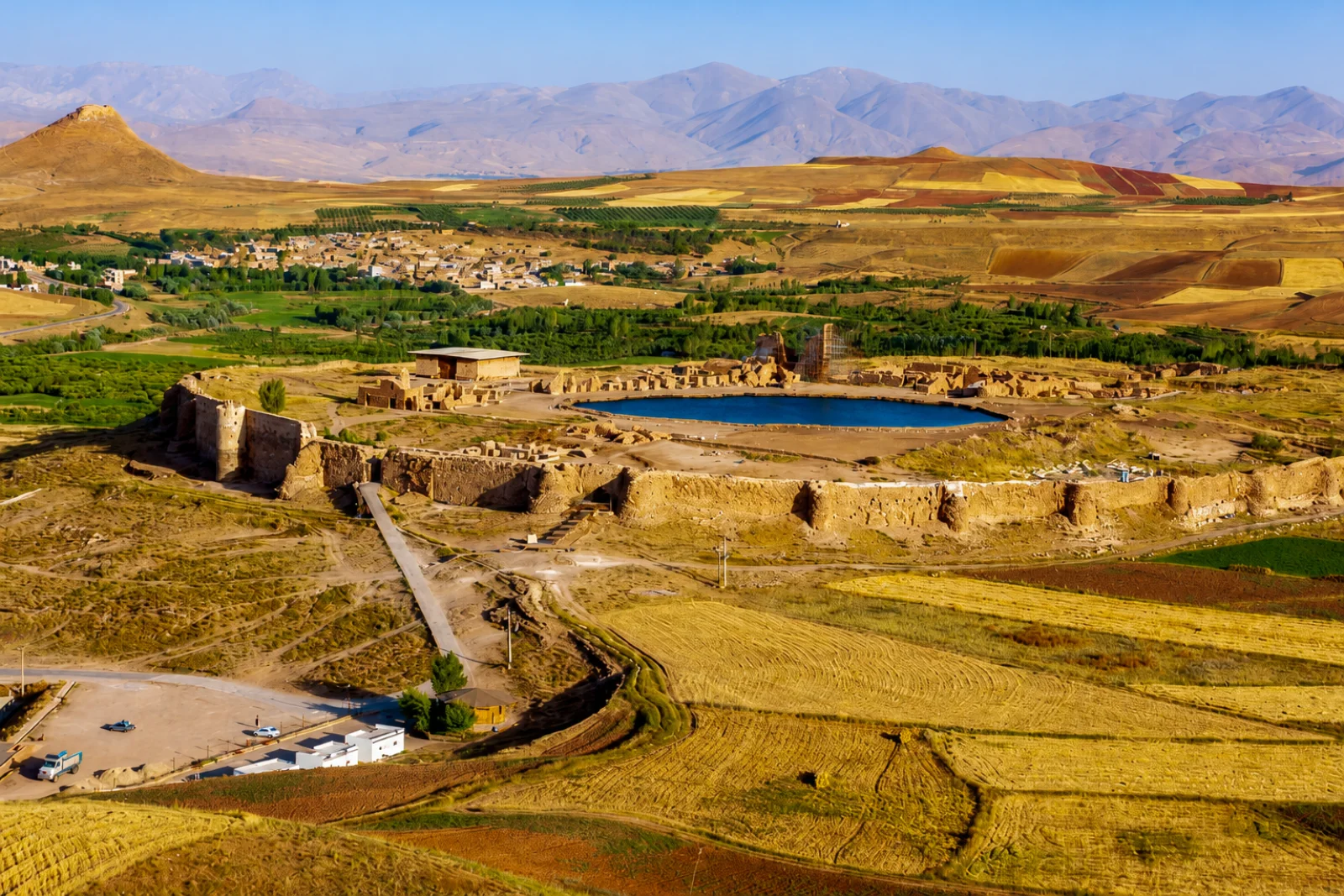
Takab, in Iran’s West Azerbaijan province, is a base for exploring Takht-e Soleyman, a major Sasanian religious complex later reused under the Ilkhanids. The sanctuary housed Adur Gushnasp, one of the most important sacred fires of Sasanian Zoroastrianism, closely associated with kingship and the warrior estate. Its surviving structures reveal successive periods of worship, royal patronage and rebuilding.
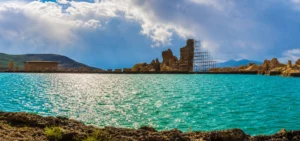
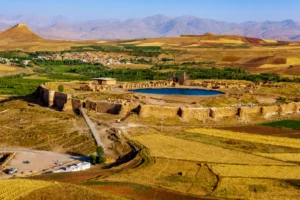
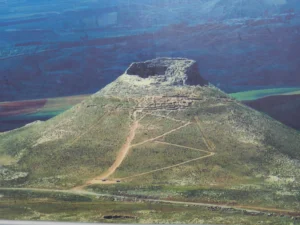
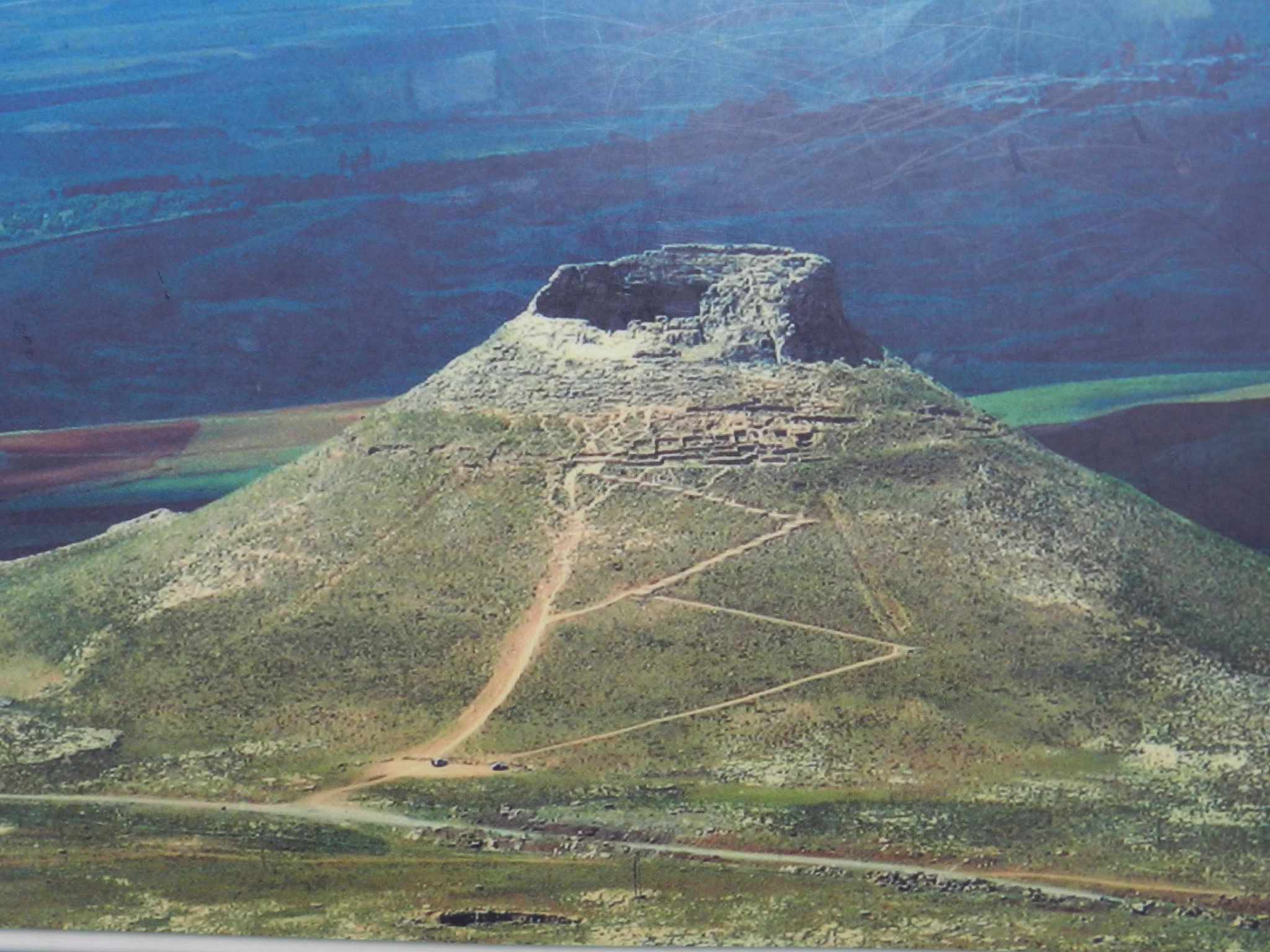
At Takht-e Soleyman, fortified stone walls enclose a spring-fed lake, with the remains of the fire temple and palatial buildings arranged around it. The relationship between water, ritual space and defensive architecture gives the complex its distinctive plan. Nearby, Zendan-e Soleyman is a steep, hollow-centred mineral cone: a separate landmark whose name means ‘Prison of Solomon’, reflecting the legendary associations attached to this landscape.
Takab’s wider district has Kurdish and Azerbaijani cultural connections and a carpet-weaving tradition associated with Afshar rugs. These living traditions complement the region’s archaeological remains. The principal monuments lie outside town; transport and current site-access arrangements require confirmation before an excursion.
- Explore Takht-e Soleyman’s walled ruins and deep lake, tied to Sasanian Iran.
- Walk up Zendan-e Soleyman, the hollow volcanic cone rising west of town.
- Use Takab as a base for high plateau drives and quiet village lanes.
- Browse local workshops and markets for handwoven rugs and everyday Kurdish-Azeri flavours.
- Photograph layered stone, brick, and water engineering details around the ancient sanctuary complex.
Takab, in the uplands of West Azerbaijan, has a cold highland climate rather than the desert conditions sometimes associated with Iran. Winter can bring snow, frost and icy roads, making warm layers and footwear with good grip important. If travelling to Takht-e Soleyman or other sites outside town, confirm road conditions and site access locally after snowfall; do not assume that a clear day in Takab means an equally straightforward journey into the surrounding hills.
Spring brings a gradual thaw, with rain and lingering cold possible, particularly early in the season. Waterproof footwear is useful on wet or uneven ground. Summer generally offers milder conditions than Iran’s hotter lowlands, though exposed archaeological sites still call for sun protection, drinking water and a layer for cooler evenings. Autumn becomes progressively colder, so allow for shorter daylight hours when planning excursions and carry extra layers.
Takab, in southern West Azerbaijan province, is reached by road. Shahin Dezh and Bijar are useful nearby towns to consider when planning an approach, while Zanjan and Urmia are larger regional gateways for an onward road journey. A private car or an arranged taxi transfer offers flexibility, though the route and transfer arrangements should be confirmed locally.
For public transport, check whether a direct bus serves Takab from your departure city or whether a change is needed. Air and rail connections are not verified here; confirm the appropriate arrival airport or station and onward road transport before booking.
Explore Takab
Attractions and Must-See Places in Takab
Find Your Way Around Takab
Signature Tours including Takab
We believe your journey through Takab should be immersive and deeply personal.
No results found.
Keep Exploring
Discover Iran’s Most Beautiful Cities
Frequently Asked Questions about Takab
Takab, in Iran’s West Azerbaijan province, is a practical base for exploring Takht-e Soleyman and the surrounding highland landscape. The town suits travelers interested in archaeology and quieter rural scenery rather than a packed schedule of urban attractions.
Make the UNESCO-listed Takht-e Soleyman archaeological complex the centerpiece of your visit, allowing time to appreciate its fortified setting, sacred lake, and remains associated with Sasanian Zoroastrian worship. Nearby Zendan-e Soleyman, a striking volcanic hill, can complement the outing if conditions and access permit; uneven ground and exposed slopes make sturdy footwear useful.
Plan your transport beyond town before setting out, as rural sights are spread apart and onward connections may not suit a sightseeing itinerary. A locally arranged driver can simplify the day; agree on the route, waiting time, and return journey beforehand. Confirm accommodation and site access locally, particularly around holidays or in colder weather.
Spring and early autumn generally offer a comfortable balance for outdoor sightseeing, though highland weather can change quickly. Carry layers, sun protection, water, and some cash, and download maps before leaving town. Winter conditions can complicate road travel, so check the forecast and local road advice before committing to an excursion.
Takab is a practical base for visiting Takht-e Soleyman, the UNESCO-listed archaeological complex in the surrounding highlands. Allow a substantial part of the day for the outing rather than treating it as a quick stop: the setting, fortified enclosure, and remains around the spring-fed lake reward an unhurried visit.
A private car or a locally arranged driver is generally the simplest option. Ask your accommodation in Takab to help arrange transport, and agree on the full itinerary, waiting time, and return journey before setting off. Confirm current access and visiting arrangements locally, particularly during cold or snowy weather.
At the site, look for the remains of the Sasanian Zoroastrian sanctuary and later Ilkhanid structures. Wear sturdy shoes for uneven ground and bring water, sun protection, and an extra layer for exposed conditions. Stay behind barriers and away from the lake’s edge; this is an archaeological site, not a swimming spot.
In Takab, look for regional home-style cooking rather than a fixed checklist of dishes unique to the town. Menus may include kebabs with rice or bread, hearty soups such as ash, and slow-cooked stews; ask what has been prepared that day. The area’s Azerbaijani and Kurdish influences make local recommendations especially useful.
For breakfast, ask about fresh bread, cheese, honey, and other available accompaniments. If you are interested in local dairy products, choose pasteurized options where possible, particularly if you are pregnant or have a weakened immune system. A bakery or busy breakfast spot can be a rewarding introduction to everyday food in Takab.
Vegetarians should explain their needs clearly: a soup or vegetable dish may still contain meat stock, and dairy is common. Ask your accommodation to write down any dietary restrictions in Persian, and confirm ingredients before ordering. For a more local meal, request a recommendation for somewhere serving the day’s cooked dishes rather than only grilled food.
You can explore central Takab without renting a car, combining walks between nearby stops with taxi rides for longer distances. For villages and countryside outside town, arranging a local driver is usually more practical than relying on public transport, particularly when you want several stops in one outing.
Ask your accommodation to help arrange a taxi or driver, and agree on the full route before departure. Clarify whether the quoted fare includes waiting time, additional stops, and the return journey; having the destination names written in Persian can also help avoid misunderstandings. For rural visits, arrange your return rather than assuming you will find another vehicle on arrival.
Keep your itinerary flexible in cold or wet weather, when road conditions can affect journeys through the surrounding highlands. Confirm access locally before setting off, and carry water, a charged phone, and any supplies you need for time away from town.
Takab is associated with the Afshar weaving tradition, making carpets and smaller woven pieces worth exploring if you enjoy regional crafts. Rather than assuming every carpet on sale was made nearby, ask where it was woven, what materials it contains, and whether it is new or previously used.
Compare several pieces before deciding, ideally viewing them in natural light with the seller’s permission. Look at the back as well as the surface, checking for worn areas, repairs, and damaged fringes or edges. Handmade work can have small irregularities, so symmetry or knot density alone should not determine your choice.
Ask sellers to explain differences in price, and request a receipt describing the piece and the amount paid. If you intend to take a carpet abroad, check current Iranian export requirements and your destination’s import rules before buying, particularly for anything described as antique. A smaller piece may be easier to pack, but confirm its dimensions and weight rather than judging it while folded.