

Discover the Treasures of Iran
Bam Citadel (Arg-e Bam)
Centuries held in earth
- Attractions
- Bam Citadel (Arg-e Bam)
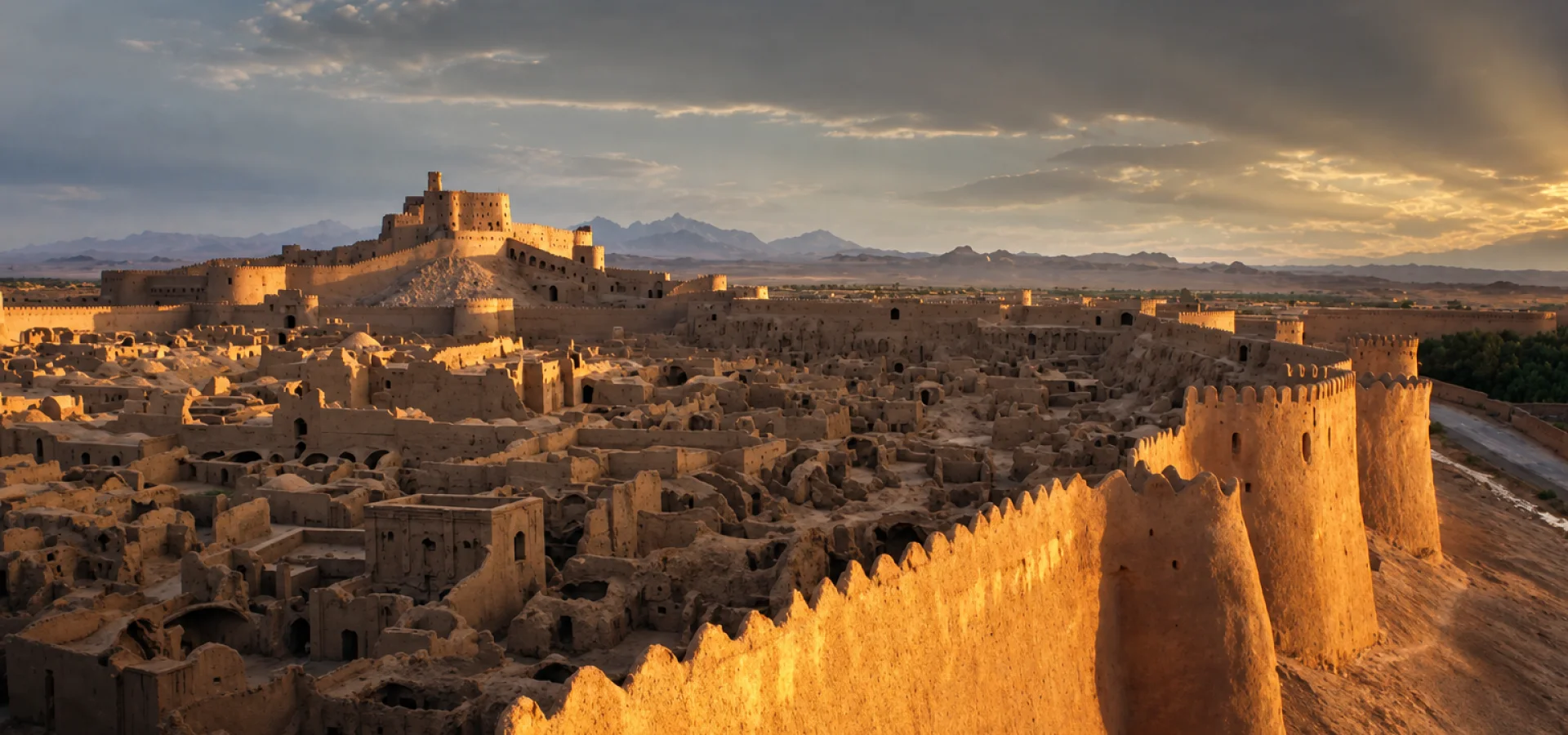
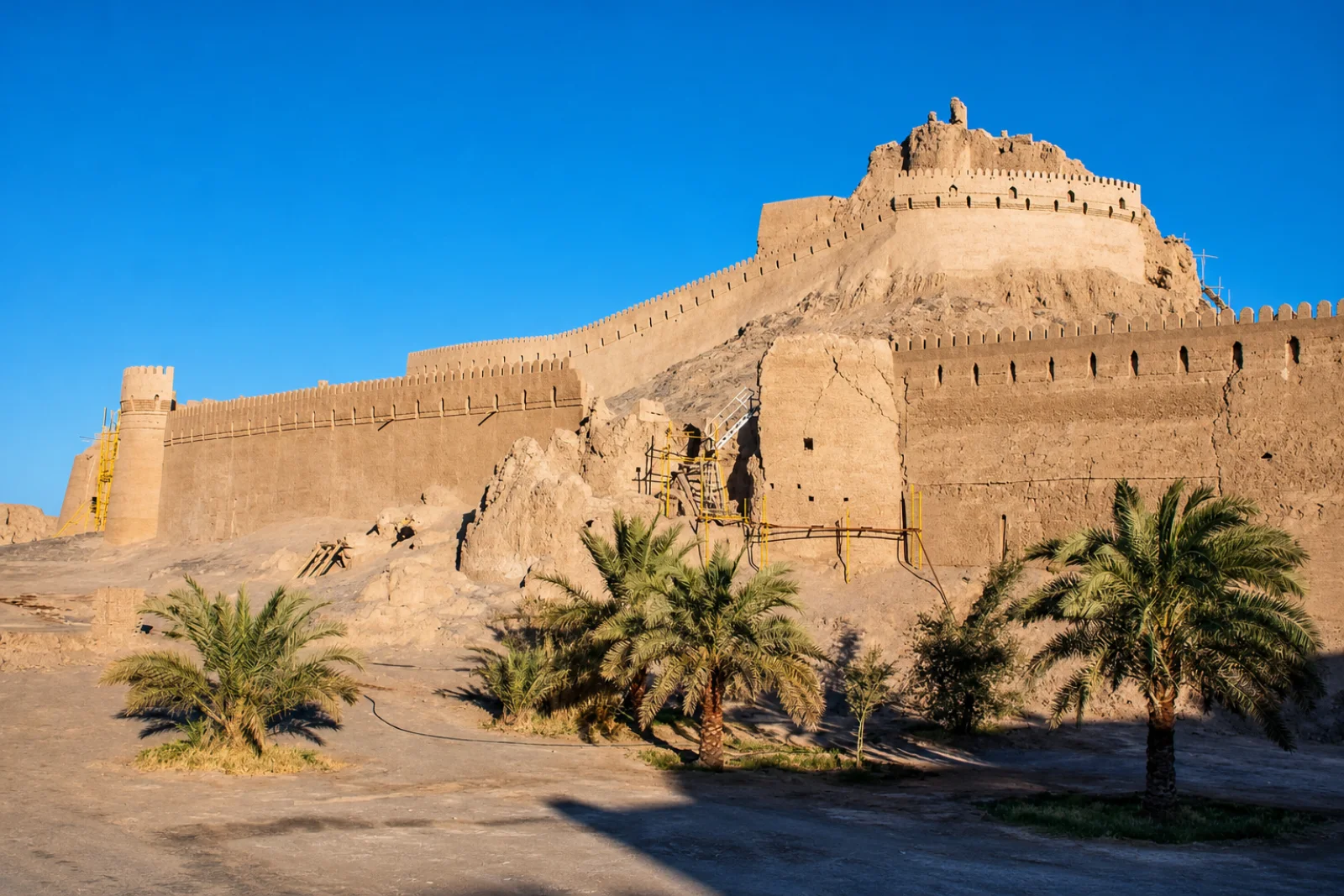
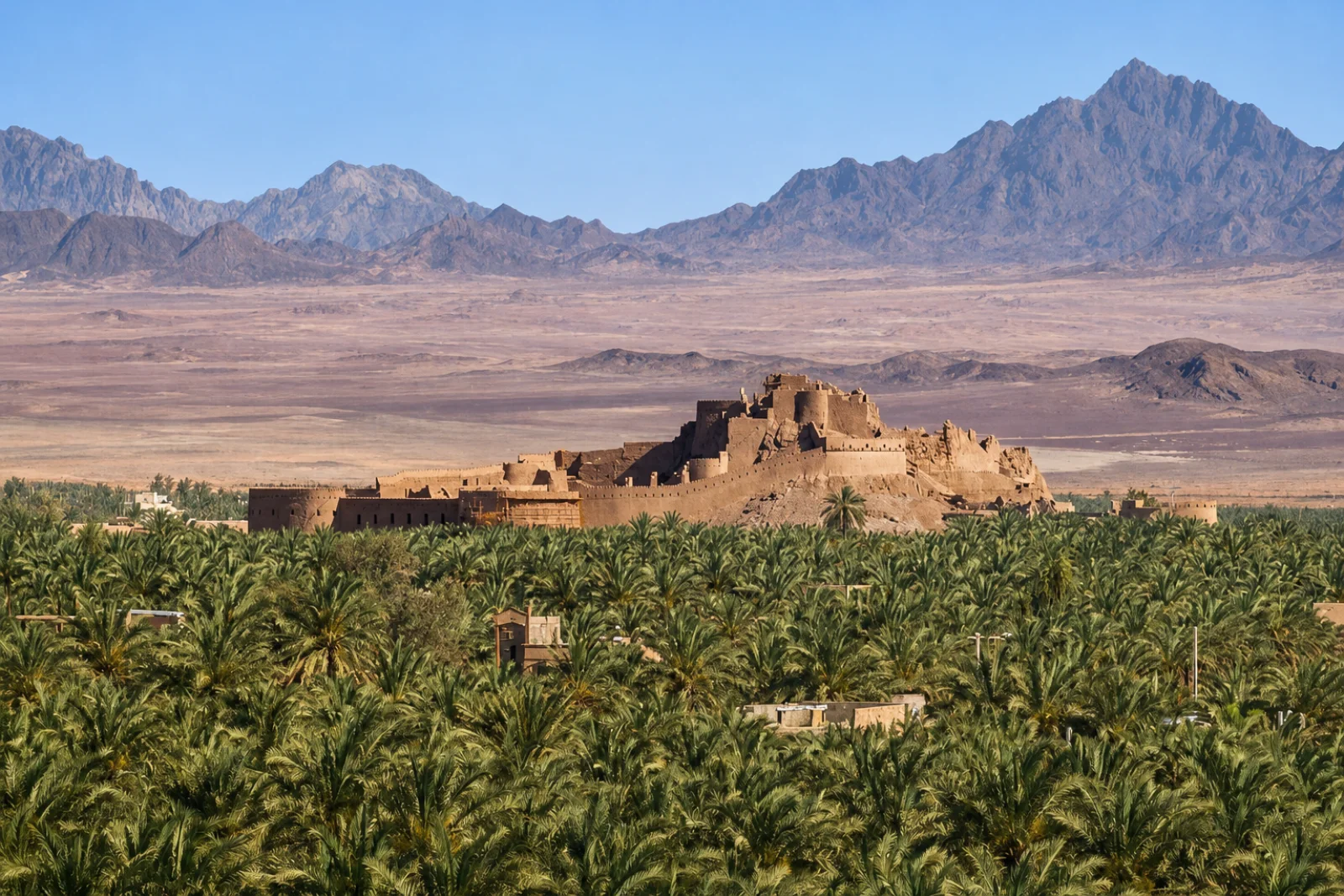
Bam Citadel (Arg-e Bam) stands on the north-eastern edge of Bam in Kerman province, south-eastern Iran. Its fortified earthen settlement rises above an oasis landscape of date palms, sustained historically by qanats: underground channels that carry water from aquifers to cultivated land. The citadel forms part of the UNESCO World Heritage property ‘Bam and its Cultural Landscape’, inscribed in 2004.
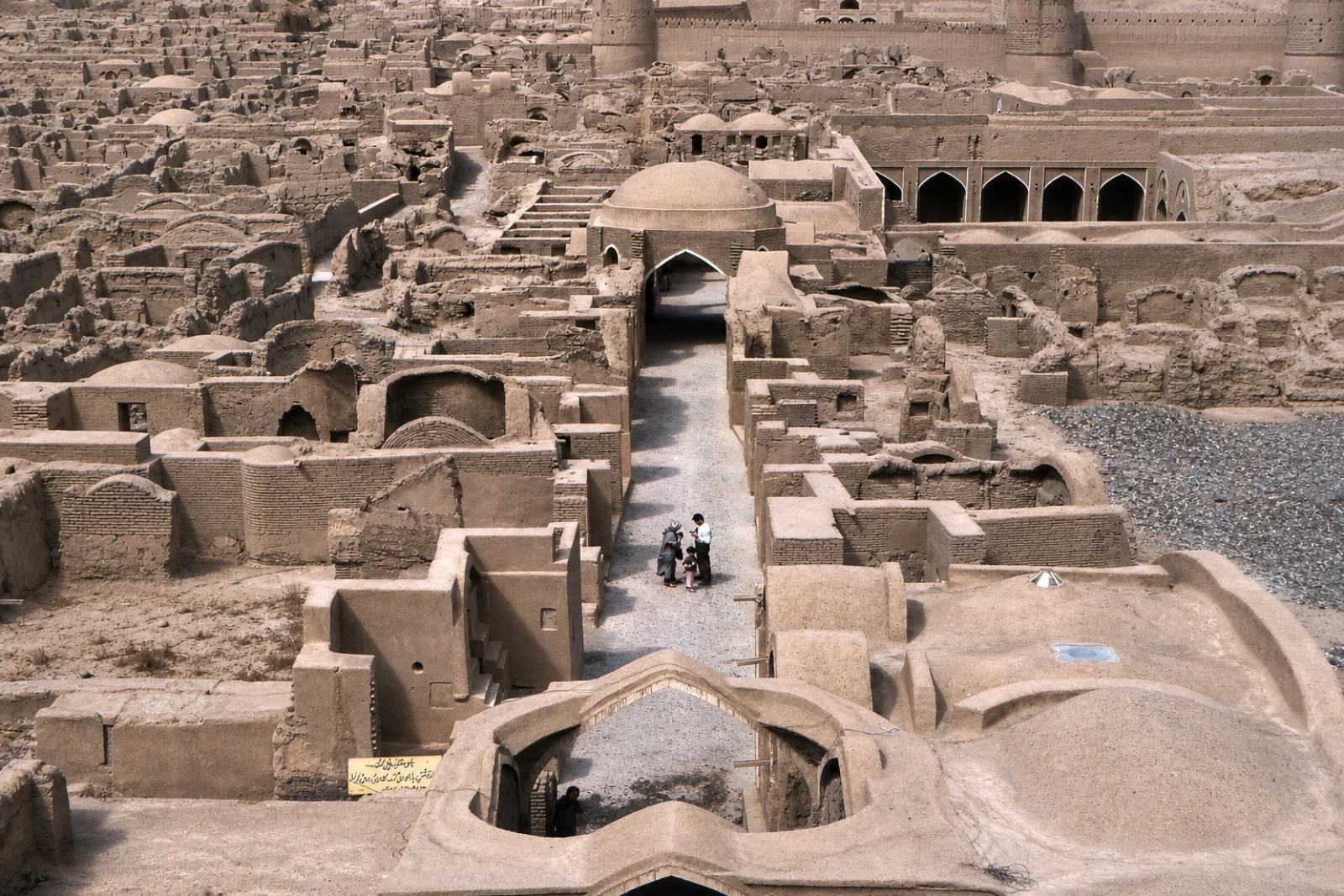
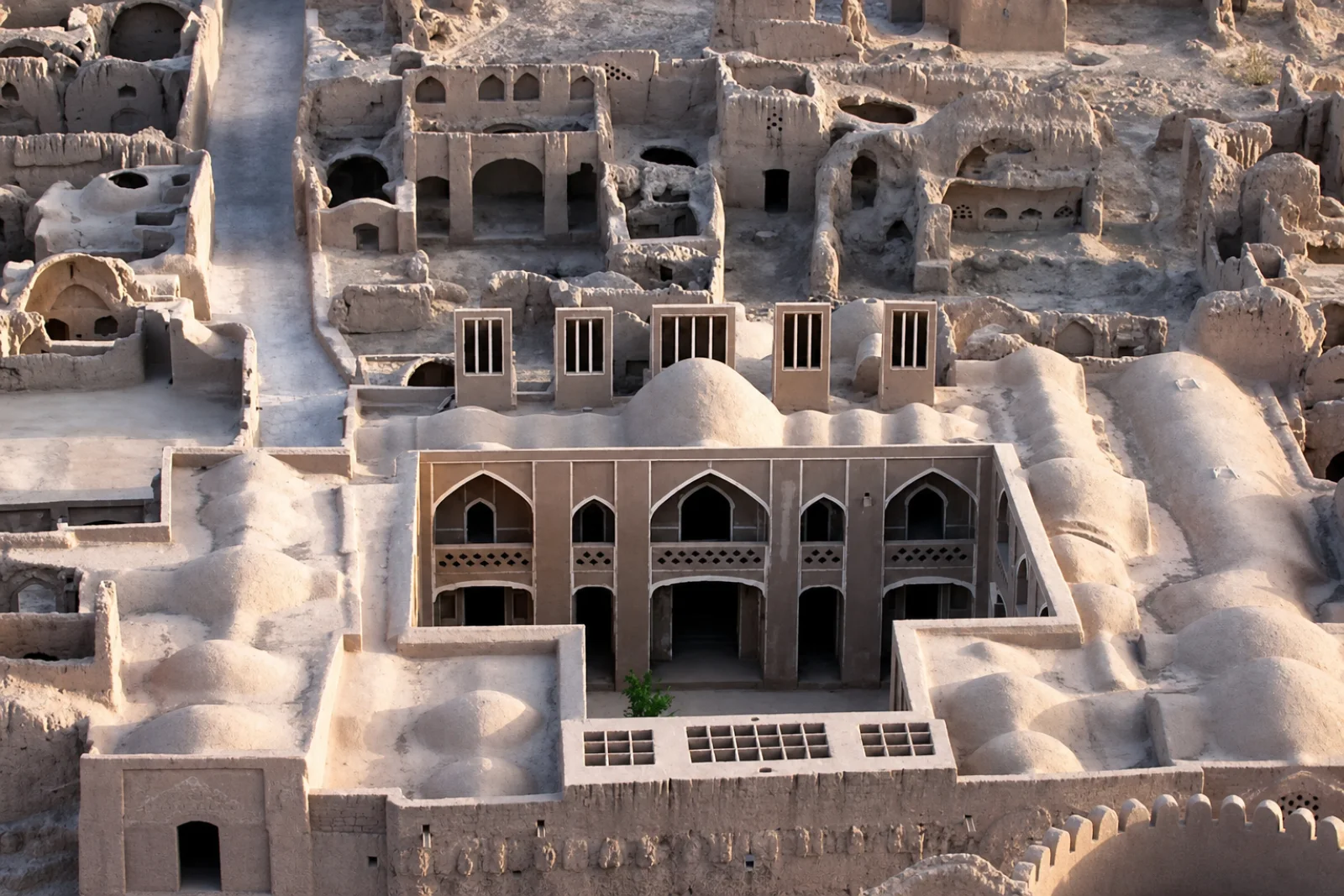
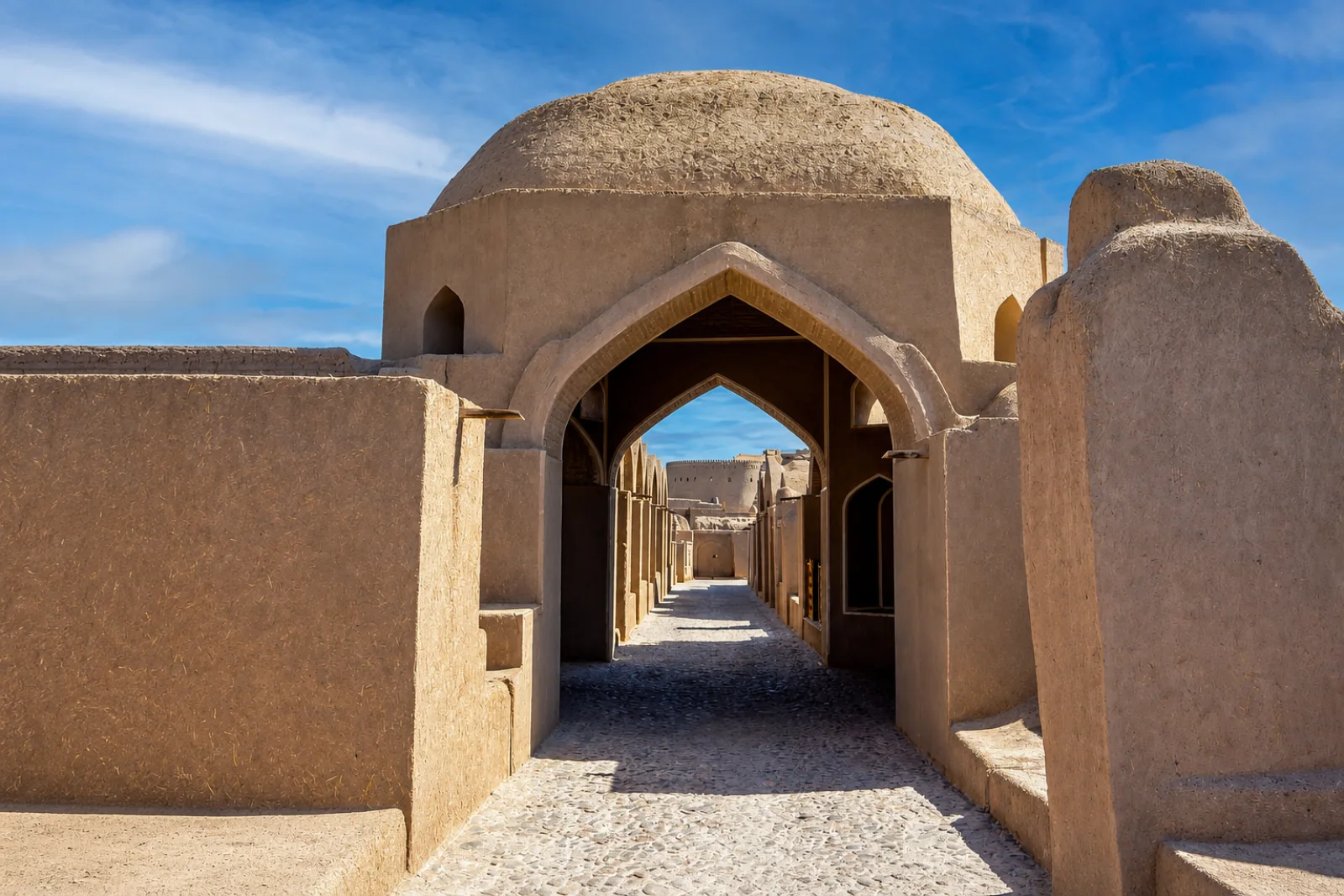
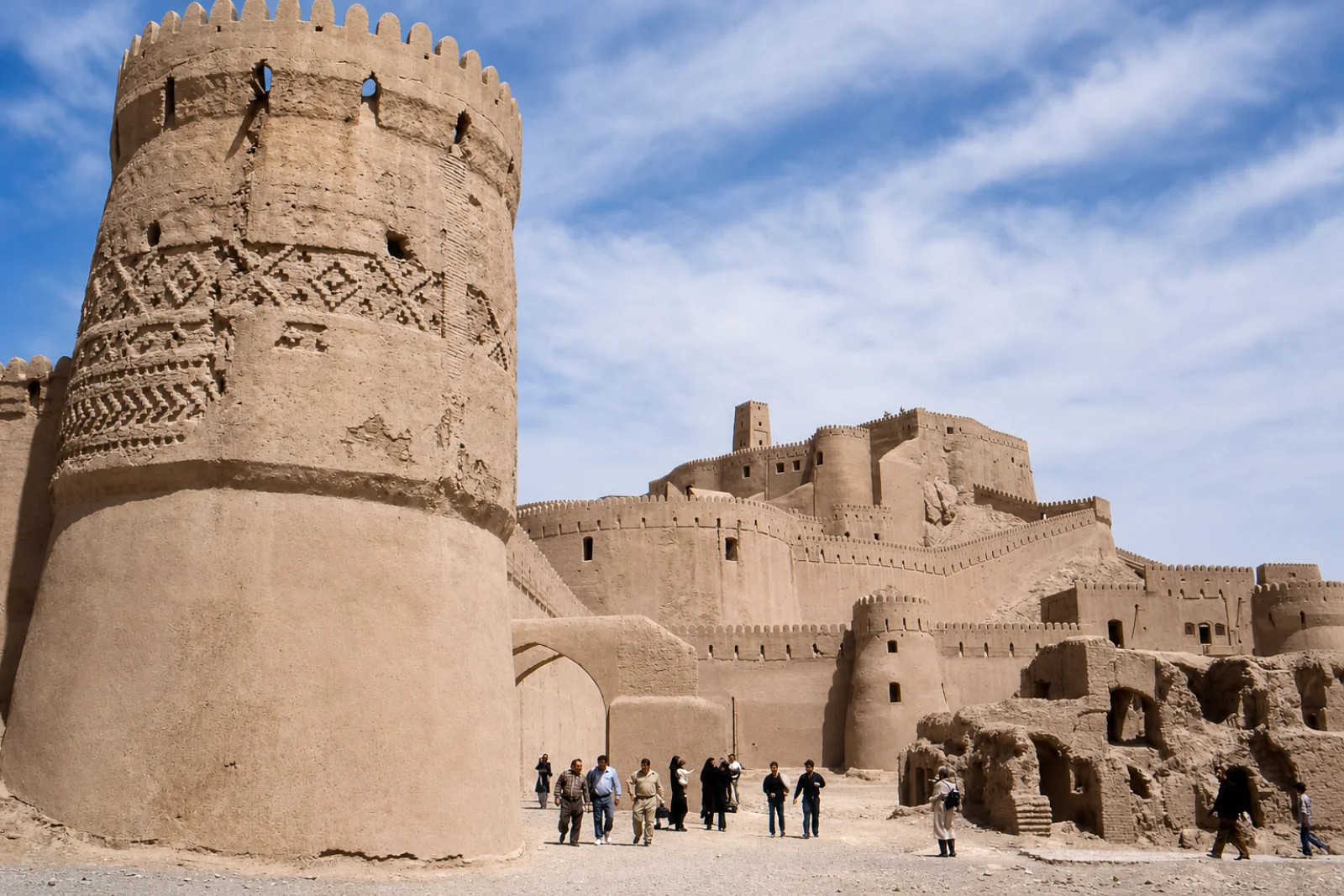
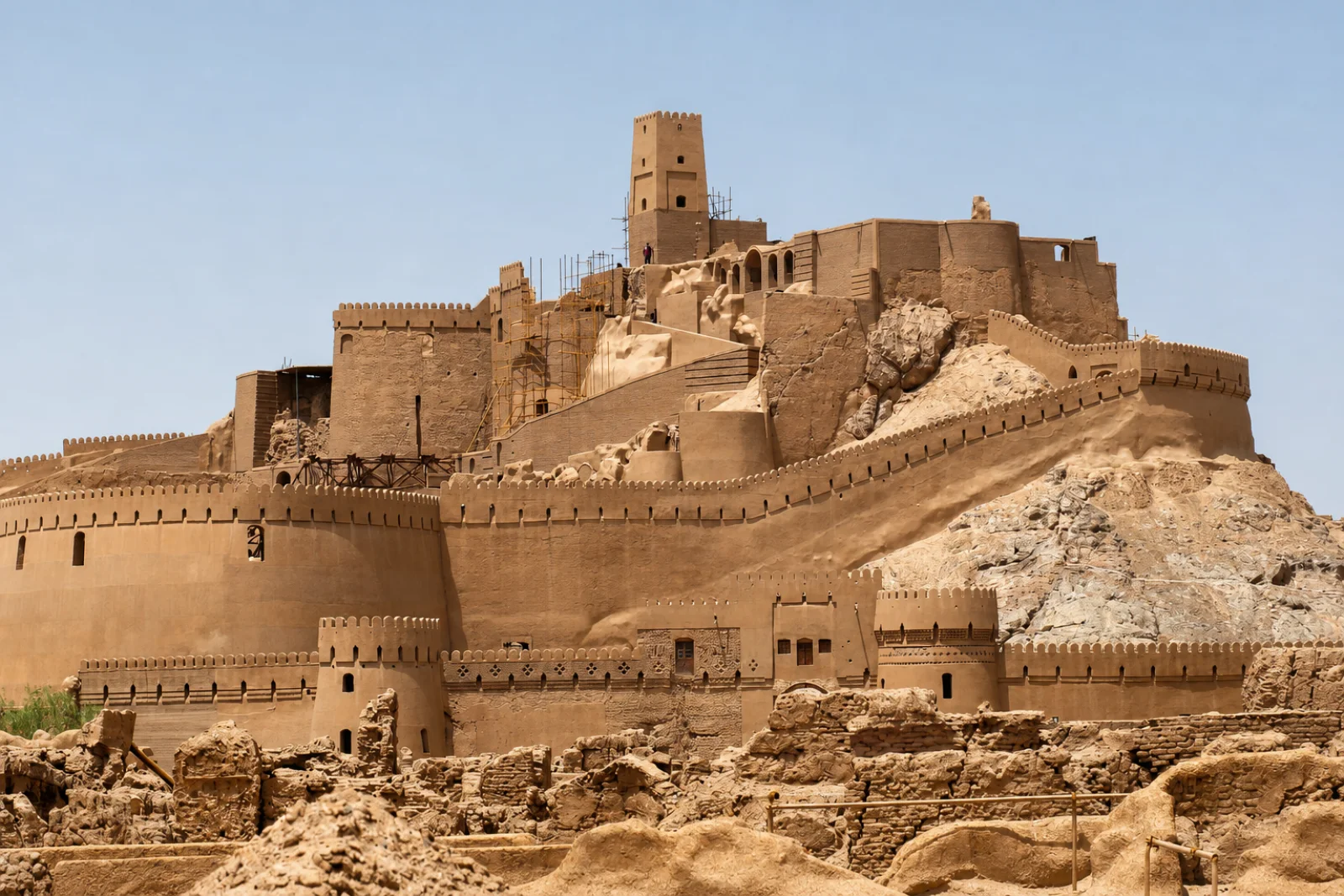
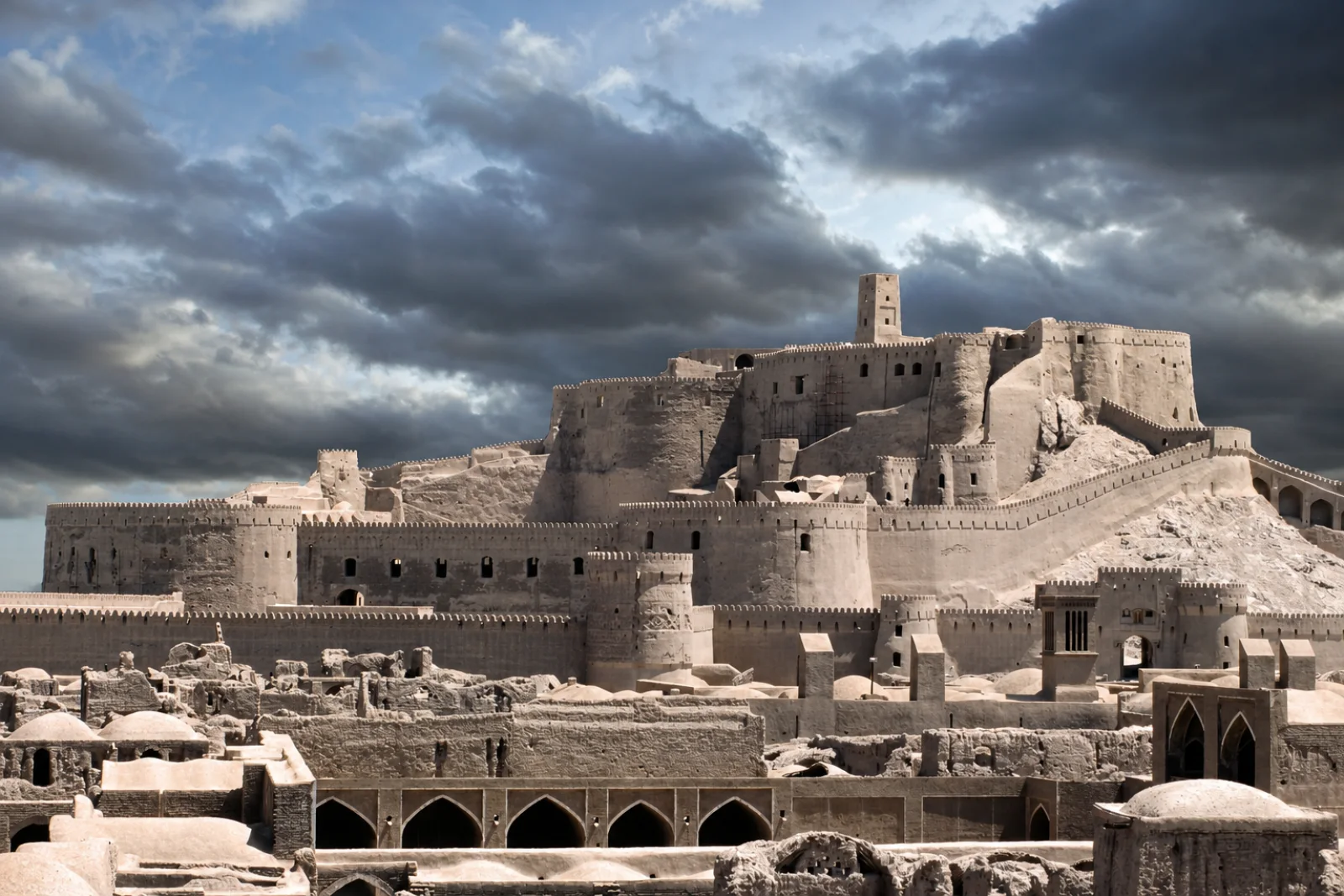
The surviving complex developed over many centuries, so it should not be understood as the work of a single dynasty. Bam prospered through regional trade and the production of silk and cotton textiles. Within its enclosing walls, the citadel combined residential neighbourhoods, a bazaar, religious buildings and military facilities, with the governor’s compound occupying the highest ground. Sun-dried mud brick and layered earth gave the buildings their characteristic colour and allowed thick walls, vaulted rooms and closely packed streets to shape an urban environment suited to the desert climate.
The earthquake of December 2003 devastated Bam and severely damaged the citadel. Conservation and reconstruction are therefore central to understanding what visitors see today, rather than a separate footnote to its history. The contrast between the elevated fortified core, the lower town and the surrounding oasis helps explain how defence, settlement and water management worked together. Current visitor access and which sections remain affected by conservation work require local confirmation.

A Glimpse Into Bam Citadel (Arg-e Bam)
See Bam Citadel (Arg-e Bam) Through Moments
Visitor Information
Essential Information for Visiting Bam Citadel (Arg-e Bam)
Bring sun protection and water, especially in warmer months; much of the visit is outdoors with limited shade.
Wear sturdy, grippy footwear: uneven ground, steps and loose dust are common across the citadel area.
After the 2003 earthquake, restoration has been ongoing; some sections may be closed or subject to scaffolding, so it’s worth confirming current access locally before you go.
If offered on site, a local guide can help you read the layout (gates, walls and quarters) without wandering into restricted or unsafe areas—check arrangements and language options on arrival.
Signature Tours including Bam Citadel (Arg-e Bam)
We Believe Your Journey Through Bam Citadel (Arg-e Bam) Should Be Personal.
No results found.
Frequently Asked Questions about Bam Citadel (Arg-e Bam) and Nearby Attractions
Bam Citadel (Arg-e Bam), in Bam, Iran, is a vast earthen fortified settlement rather than a single castle building. Its appeal lies in the relationship between defensive walls, residential quarters, and the elevated citadel, so allow time to understand the layout rather than heading straight for a viewpoint.
The devastating 2003 earthquake caused extensive damage, and conservation and reconstruction are important parts of what you see today. Some areas or routes may be restricted as work continues; confirm current access locally and follow signs and staff guidance. A local guide can help distinguish historic features from restored sections and explain how the settlement functioned.
Expect exposed walking, uneven ground, and changes in level. Wear sturdy shoes, carry water, and bring sun protection; an earlier visit can make walking more comfortable in hot weather. Avoid climbing earthen walls or stepping beyond marked routes, both for your safety and to protect the fragile fabric.
Bam Citadel (Arg-e Bam), in Bam, Iran, is best understood as a fortified earthen town rather than a single castle. Its walls, towers, gateways and network of lanes reveal how homes, communal spaces and a ruling compound fitted within one defensive enclosure.
Look for the contrast between the lower residential quarters and the elevated governor’s compound, which expresses the settlement’s hierarchy through its position. The earthen architecture is the main attraction: thick walls, vaulted spaces and closely grouped buildings show how the town was shaped around its desert setting.
The 2003 earthquake caused extensive damage, and conservation and reconstruction have shaped what visitors see today. As you explore, use interpretive material where available to distinguish historic fabric from restored sections, and confirm locally which routes and areas are accessible rather than expecting every part of the citadel to be open.
Bam Citadel (Arg-e Bam), in Bam, Iran, is significant because it preserves the form of a fortified earthen town, not simply an isolated fortress. Its walls, residential quarters and elevated stronghold show how urban life and defensive planning developed together in a desert environment.
Bam prospered through regional trade and textile production, with connections to the wider Silk Roads network. The citadel’s architecture also demonstrates the possibilities of earth as a building material: thick walls and closely arranged buildings helped create spaces suited to the hot, dry climate. The complex developed over centuries rather than belonging to a single building campaign.
The devastating 2003 earthquake made Arg-e Bam an important site for heritage conservation as well. Substantial reconstruction and conservation followed, so what visitors encounter today reflects both the historic settlement and the continuing effort to preserve its surviving fabric.
For photographing Bam Citadel (Arg-e Bam) in Bam, Iran, aim for lower-angle light early or late in the day, if visitor access permits. Softer light can bring out the texture of the earthen walls, while angled shadows help distinguish towers, ramparts, and architectural details. Midday light is usually harsher, but it can still suit close studies of surfaces and strong geometric compositions.
Plan your photographs around accessible visitor routes rather than assuming every viewpoint will be open. Restoration work and access arrangements may limit particular angles, so confirm current conditions locally and allow time to find alternatives. For wide views, include some surrounding space to convey the citadel’s scale; for detail shots, look for contrasts between sunlit earth and shaded recesses without crossing barriers or climbing walls.
Bam Citadel (Arg-e Bam) in Bam, Iran, was severely damaged by the 2003 earthquake, so restoration is an important part of understanding the site today. What you encounter includes surviving historic fabric alongside repaired and reconstructed earthen structures, rather than an entirely untouched citadel. The conservation work helps explain both the vulnerability of mud-brick architecture and the skills needed to preserve it.
For visitors, conservation needs can affect which routes and sections are accessible. Ask at the entrance about the current visitor circuit and any restricted areas, and follow barriers even where a passage appears navigable. If distinguishing original features from later repairs matters to you, consider a knowledgeable local guide and ask specifically how earthquake damage and reconstruction have shaped the areas you visit.
For Bam Citadel (Arg-e Bam) in Bam, Iran, allow roughly two to three hours as a planning estimate rather than a fixed tour duration. This gives you time to explore at an unhurried pace, pause for photographs, and appreciate the scale of the earthen complex.
A shorter visit can provide an introduction, but travelers interested in architecture or visiting with a guide may prefer a half-day allowance. Build in extra time if you walk slowly or need frequent breaks, particularly in warm weather; the site’s extent can make a tightly scheduled visit feel rushed.
Before committing to onward travel, confirm current visitor access and the last admission time locally. The areas accessible on the day, your pace, and the amount of interpretation you want will determine how long your visit actually takes.
Bam Citadel (Arg-e Bam) in Bam, Iran, can be challenging for visitors with limited mobility because exploring the earthen complex involves uneven surfaces, slopes, and steps. Do not assume that a continuous step-free route reaches every area, particularly the higher sections.
Before visiting, ask site staff about the current route from the entrance, the surfaces along it, and whether there are places to pause. Wheelchair users should confirm access arrangements directly rather than relying on general descriptions of the attraction; anyone using a walking aid should consider their comfort on irregular ground.
A shorter visit focused on the more manageable areas may be preferable to attempting the full circuit. Wear supportive footwear, allow extra time, and turn back if a route becomes too steep or unstable for your needs.
Bam, in southeastern Iran’s Kerman Province, is best known for Arg-e Bam, its vast earthen citadel, and the date-palm landscape surrounding the city. Plan your visit around the citadel, but leave time to understand how the oasis setting shaped the settlement and its traditional architecture.
The devastating 2003 earthquake is essential context: much of what you see reflects extensive conservation and reconstruction rather than an untouched historic complex. A knowledgeable local guide can help distinguish restored sections and explain the citadel’s residential quarters, defensive structures, and building techniques. Access to individual areas may change with conservation work, so confirm current arrangements locally.
Bam’s desert climate makes heat and sun important planning considerations. Cooler months are generally more comfortable for walking; in warmer weather, favor the cooler parts of the day, carry water, and wear sun protection and shoes with good grip for uneven surfaces. Shade can be limited within the citadel.
If you are arriving from Kerman or continuing elsewhere in southeastern Iran, arrange onward transport before setting out rather than assuming frequent connections. Check current official travel advice and local conditions before committing to the journey, and ask your accommodation or a reputable local operator about practical arrangements.
Arg-e Bam is more than a fortress: it is a fortified earthen town, with residential neighborhoods, public buildings, and a strongly defended governor’s quarter. As you explore, look for the contrast between the lower town’s lanes and courtyard houses and the elevated seat of power. This layout helps explain how everyday life and defense fitted together.
The historic bazaar, mosque, and communal spaces reveal the settlement’s civic and commercial role. A local guide can help identify structures whose purpose may not be obvious from their surviving walls. Ask which features are original, conserved, or reconstructed, since the devastating 2003 earthquake and subsequent restoration are essential to understanding what you see today.
Where accessible, higher sections offer a clearer sense of the citadel’s scale and its relationship with Bam’s surrounding oasis. Access to individual areas can change during conservation work, so confirm the available route on arrival. Wear shoes with good grip, and stay on designated paths rather than climbing fragile earthen structures.
Bam is particularly associated with Mazafati dates, known for their dark skin, soft texture, and rich sweetness. Trying them from a local produce shop is a simple way to connect with the city’s oasis agriculture beyond its historic monuments.
Ask sellers which dates were grown locally and whether you can sample a small quantity before buying. Mazafati dates are naturally moist and can be sticky, so softness alone is not a sign of poor quality; choose a reputable seller and avoid fruit with visible mold or an unpleasant fermented smell.
If you want to take dates home, explain how long you will be traveling and whether you will have refrigeration. Soft Mazafati dates generally benefit from cool storage, so ask about suitable packaging and handling, and consider a small purchase if your onward journey will be hot. For international travel, check your destination’s current food-import rules before packing them.