

Discover the Treasures of Iran
Karim Khan Citadel
Where a Dynasty Left Its Mark

- Attractions
- Karim Khan Citadel
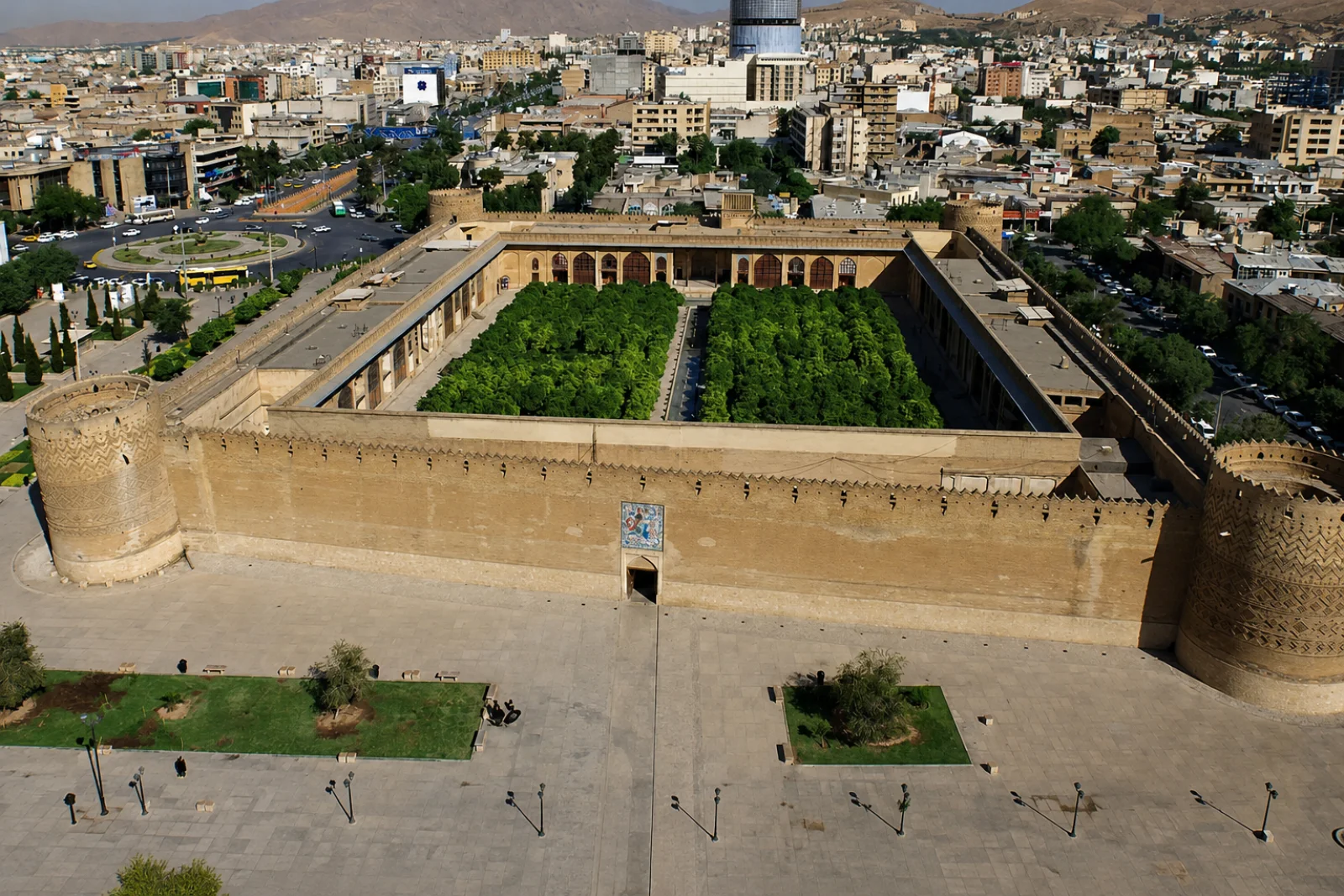
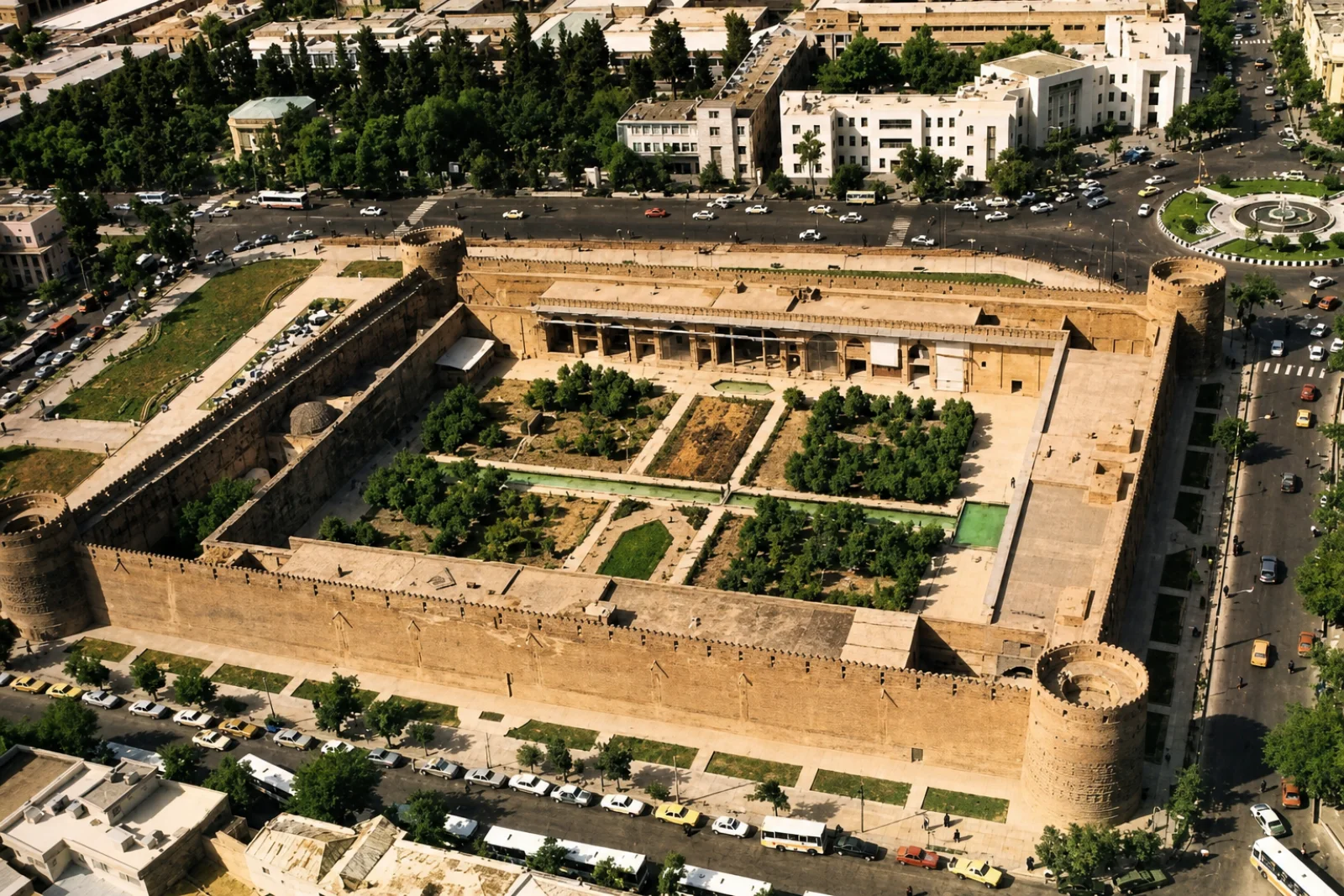
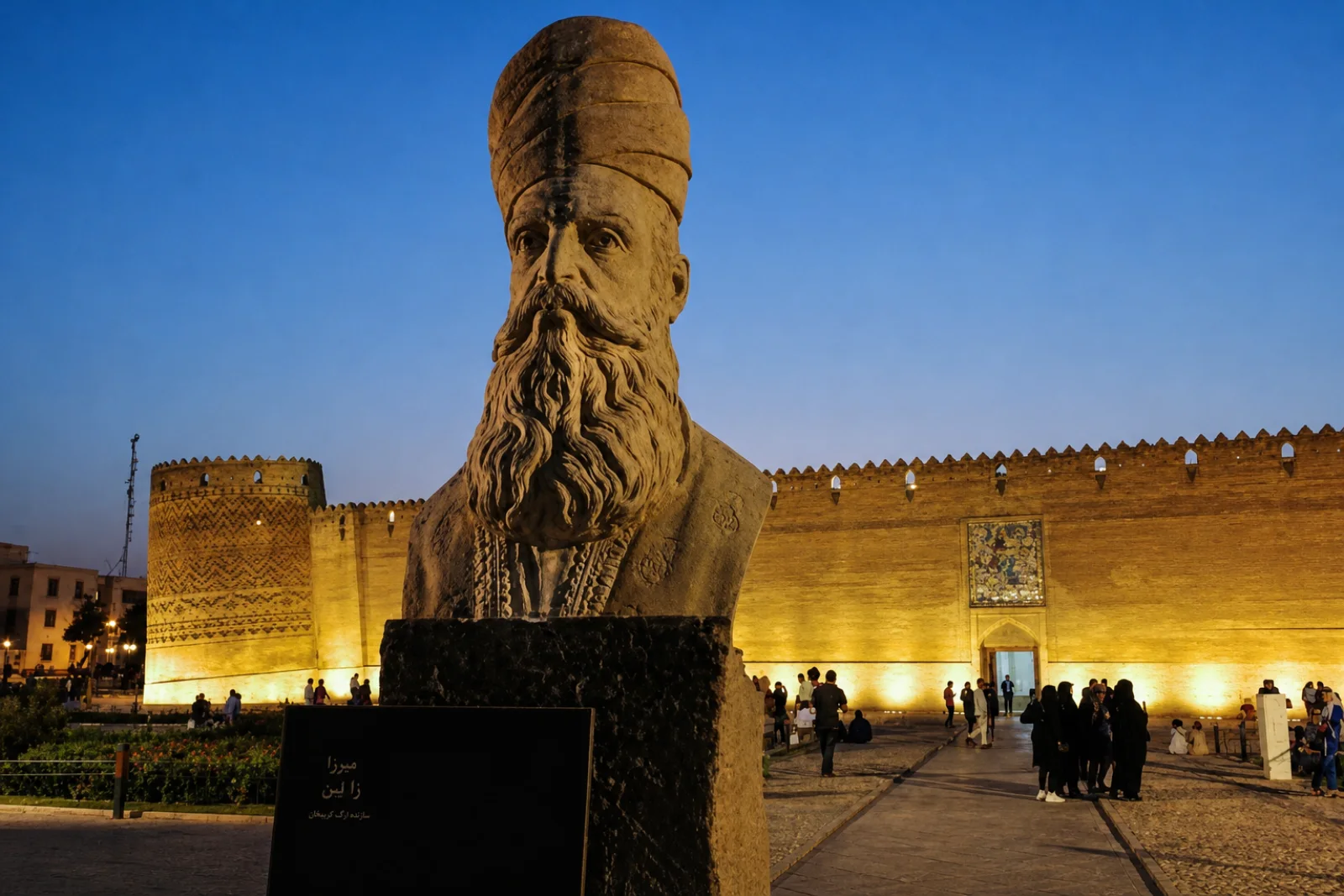
Karim Khan Citadel, also known as Arg-e Karim Khan, stands in central Shiraz, in Iran’s Fars province. Built in the 1760s for Karim Khan Zand, it combined a fortified seat of government with the ruler’s residence when Shiraz was the Zand capital. Its position within the historic city places it in the same urban context as the Vakil Bazaar, mosque and bathhouse, other major expressions of Karim Khan’s building programme.
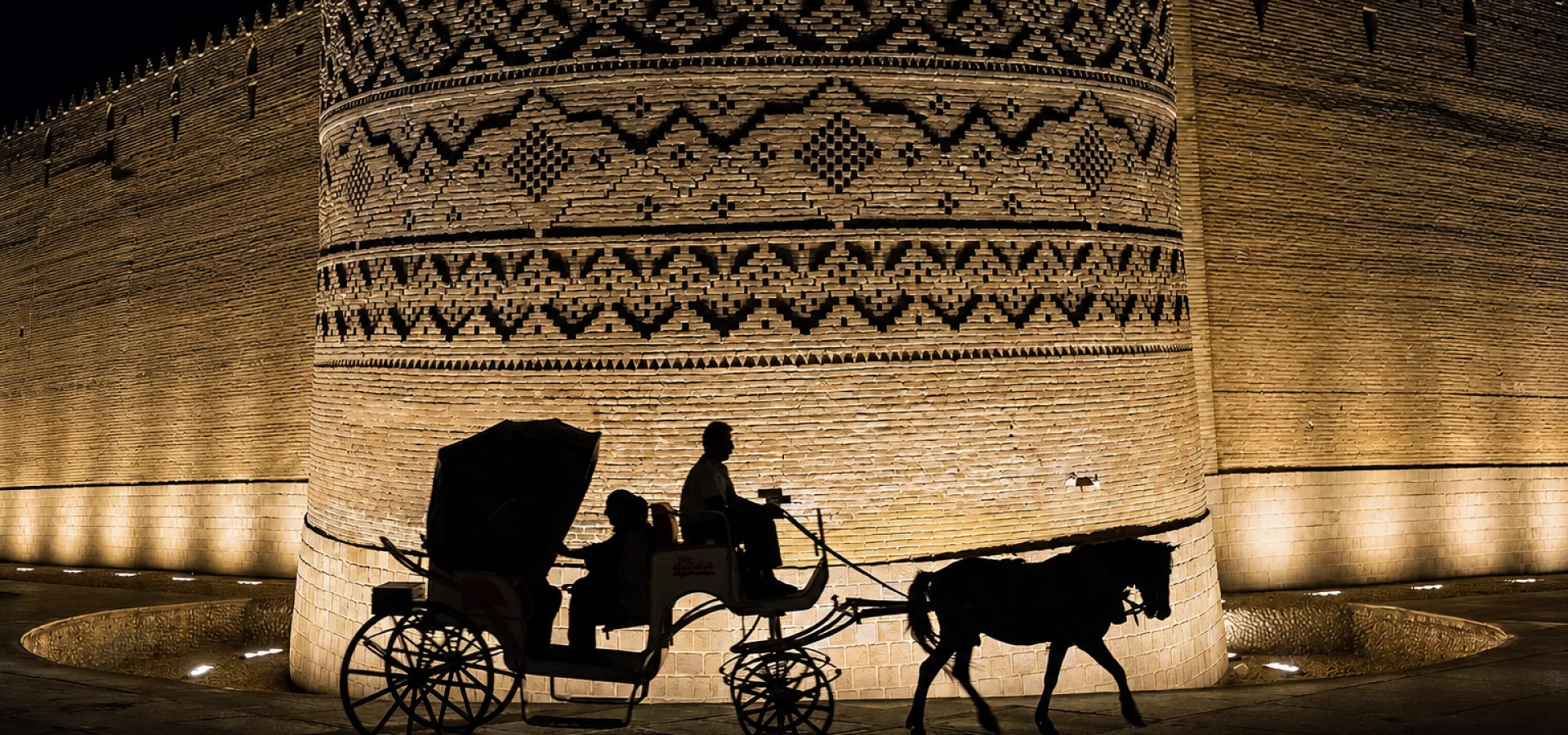
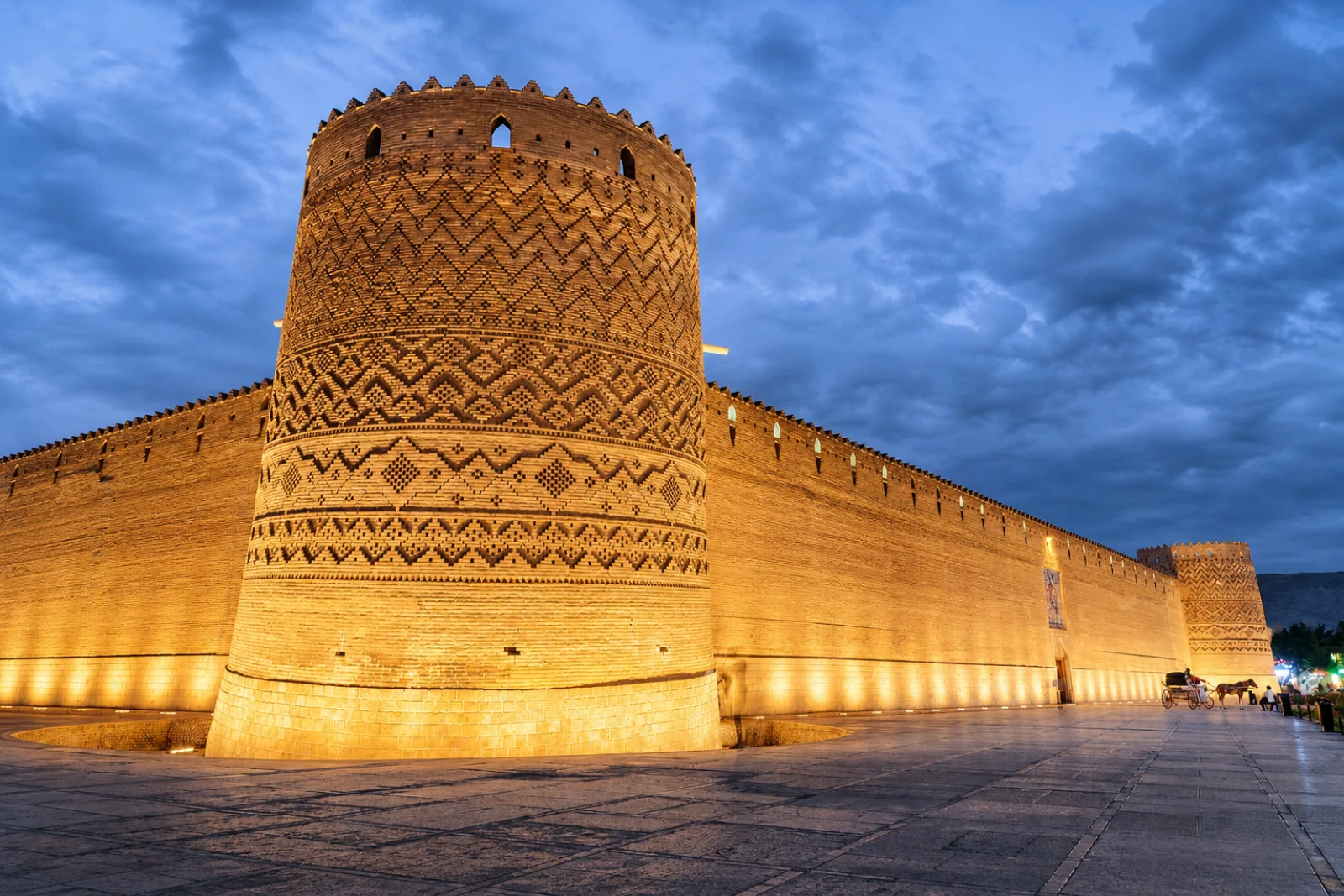
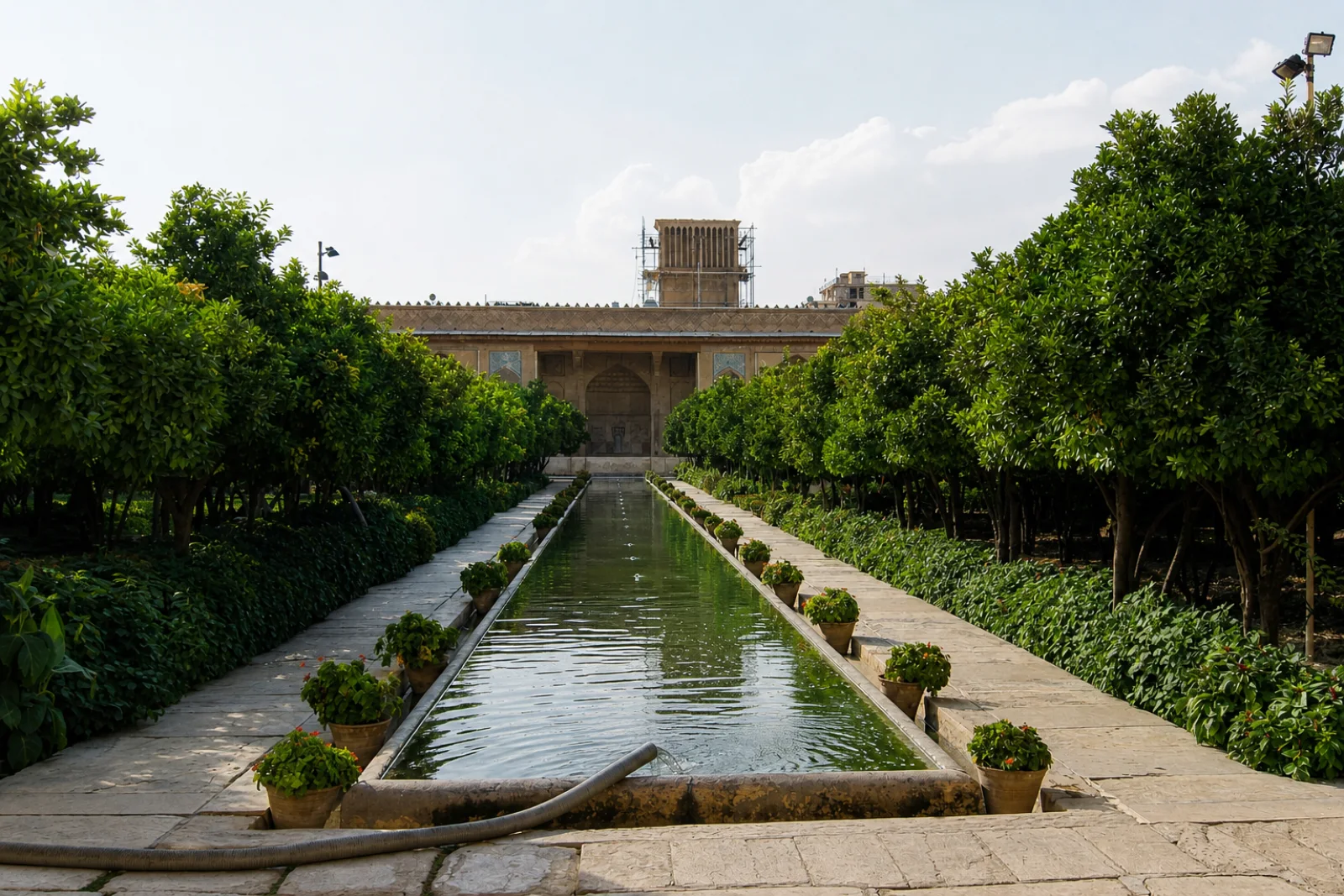
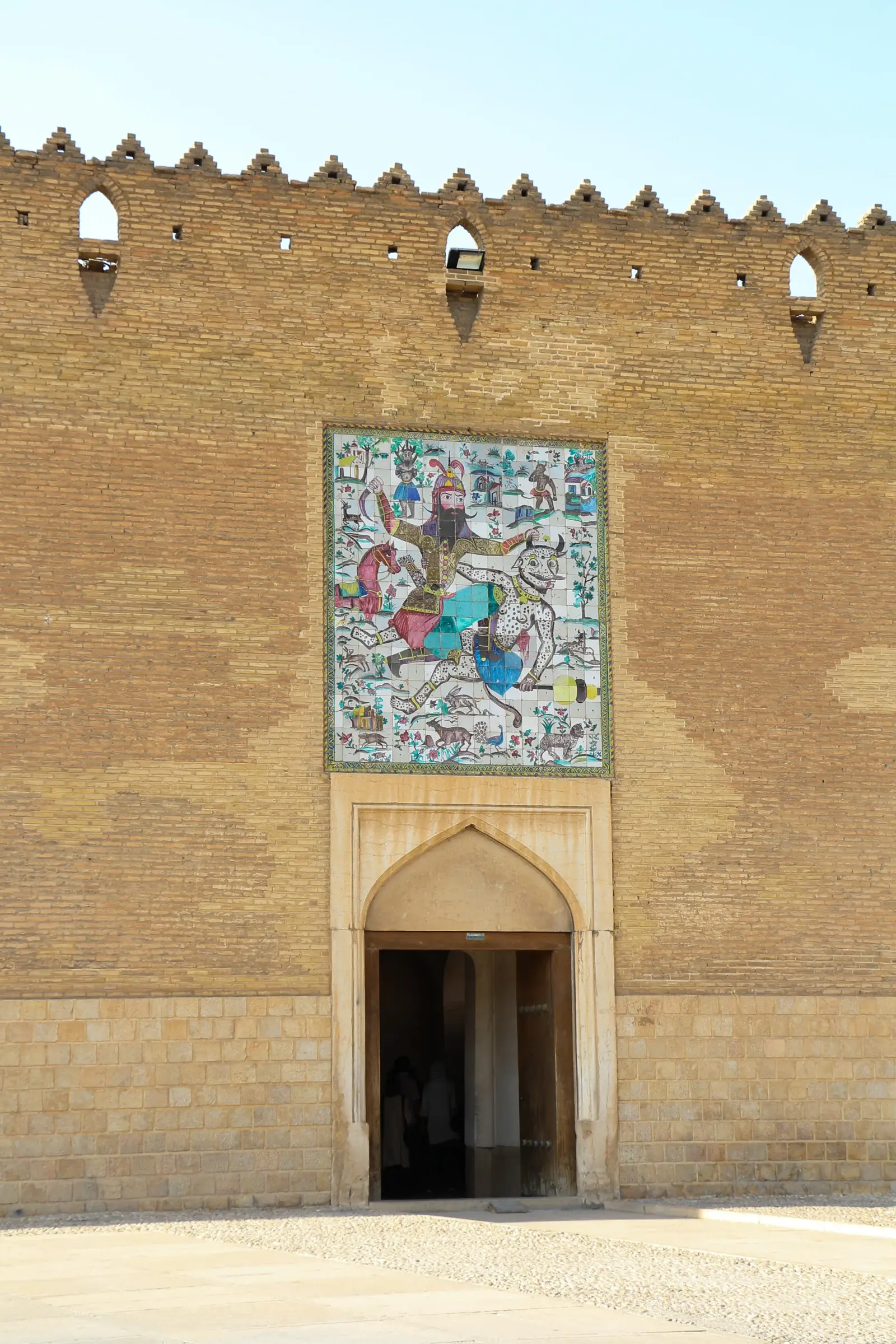
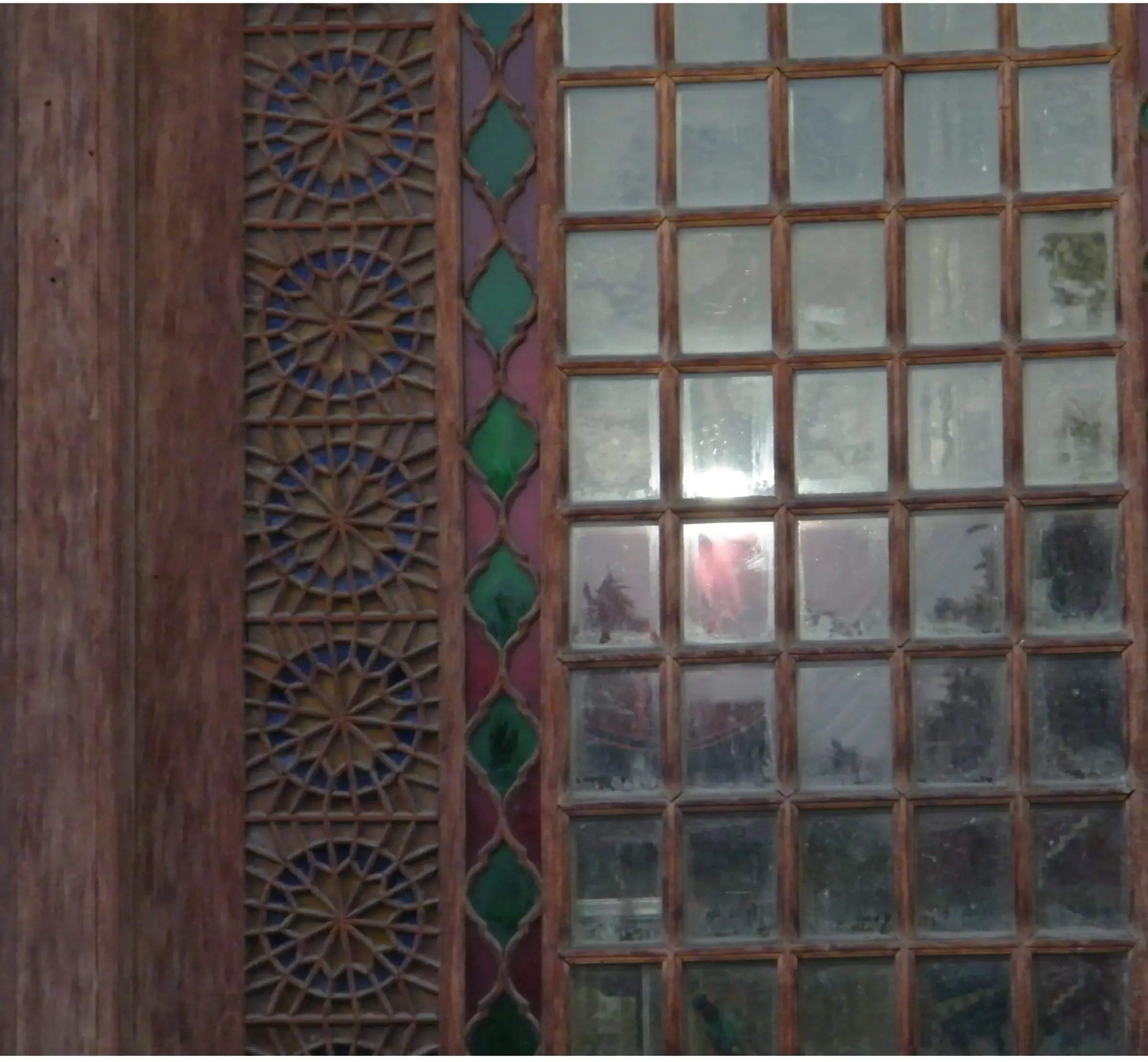
The citadel’s high brick curtain walls and four cylindrical corner towers give it a defensive exterior. Geometric brickwork animates the towers, one of which has a conspicuous lean. Inside, the character changes: a planted courtyard, citrus trees and a long water basin form the setting for residential rooms and columned porches. This contrast between an enclosed, protective perimeter and a carefully ordered domestic interior is central to understanding the building. The bathhouse adds another dimension, showing how private household facilities fitted within the fortified complex.
The citadel’s later use as a prison altered parts of its fabric, so it should not be read as an untouched Zand residence. A visit is most rewarding when attention shifts between the scale of the outer walls and the more intimate courtyard architecture: together, they reveal how government, defence and domestic life occupied a single compound.


A Glimpse Into Karim Khan Citadel
See Karim Khan Citadel Through Moments
Visitor Information
Essential Information for Visiting Karim Khan Citadel
Walk the exterior first: the high brick walls and corner towers are part of what makes this architectural landmark distinctive, and details show up well in softer morning or late-afternoon light.
Inside, take time in the courtyard and any open interior rooms, but watch your footing on worn stone, steps and thresholds that can be uneven.
In warmer months, carry water and use sun protection; much of the experience can be exposed to direct sun even if some areas are shaded.
Opening hours, ticketing and any on-site restrictions can change, so it’s sensible to confirm current arrangements at the entrance or via local sources before you plan around it.
Signature Tours including Karim Khan Citadel
We Believe Your Journey Through Karim Khan Citadel Should Be Personal.


Frequently Asked Questions about Karim Khan Citadel and Nearby Attractions
In Shiraz, Eram Garden is admired not only as a classic Persian garden but also as a snapshot of how elite garden estates evolved in the late Qajar era and into the early Pahlavi period. The garden’s long axis, water channels, and layered planting are designed to guide your eye toward the pavilion, where architecture becomes part of the landscape.
The pavilion’s façade is often the detail visitors remember most: colorful tilework with narrative scenes and ornamental motifs that reflect tastes of the time, blending courtly imagery with decorative pattern. Look closely at how the tiles frame windows and balconies—these borders act like visual “rugs,” turning the building into a display surface as much as a residence.
On-site, the visit typically feels like a slow promenade rather than a single viewpoint. Paths can be a mix of stone and compacted surfaces, and you’ll likely pause often for photos—just be mindful of planted beds and any roped-off areas around the pavilion and water features. Photography is generally part of the experience, but it’s wise to follow posted guidance and be considerate around families and students who also use the garden as a quiet retreat.