

Discover the Treasures of Iran
Sad al-Saltaneh Caravanserai
The Quiet Between Bargains
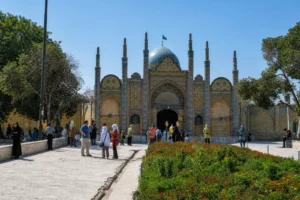
- Attractions
- Sad al-Saltaneh Caravanserai
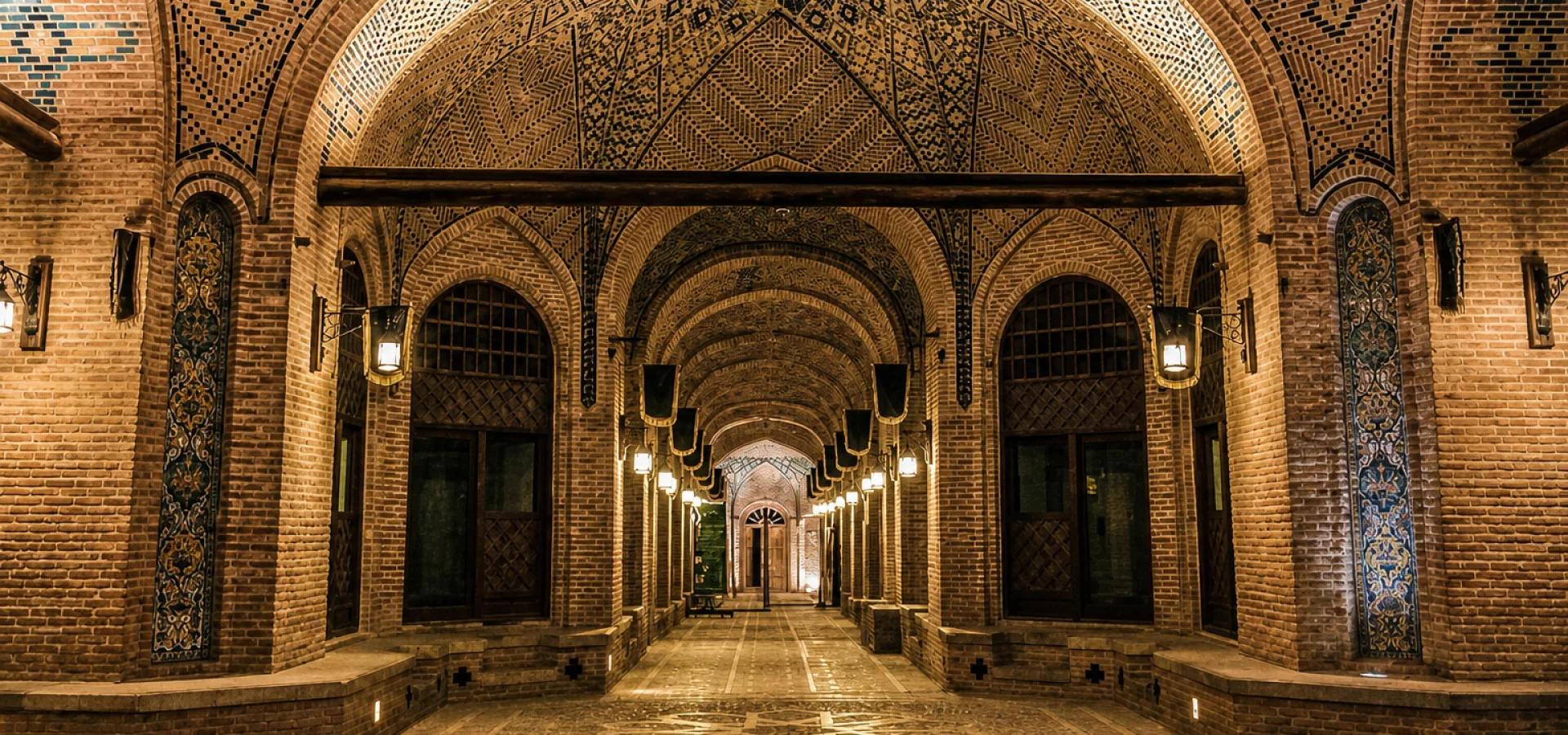
Sa’d al-Saltaneh Caravanserai stands in central Qazvin, beside the historic bazaar, with an entrance from Imam Khomeini Street. Built in the late nineteenth century under Baqer Khan Sa’d al-Saltaneh, the Qajar governor whose title it bears, it served the city’s commercial life. Unlike an isolated roadside caravanserai, this was an urban trading complex, where merchants could store goods, conduct business and find accommodation close to the market.
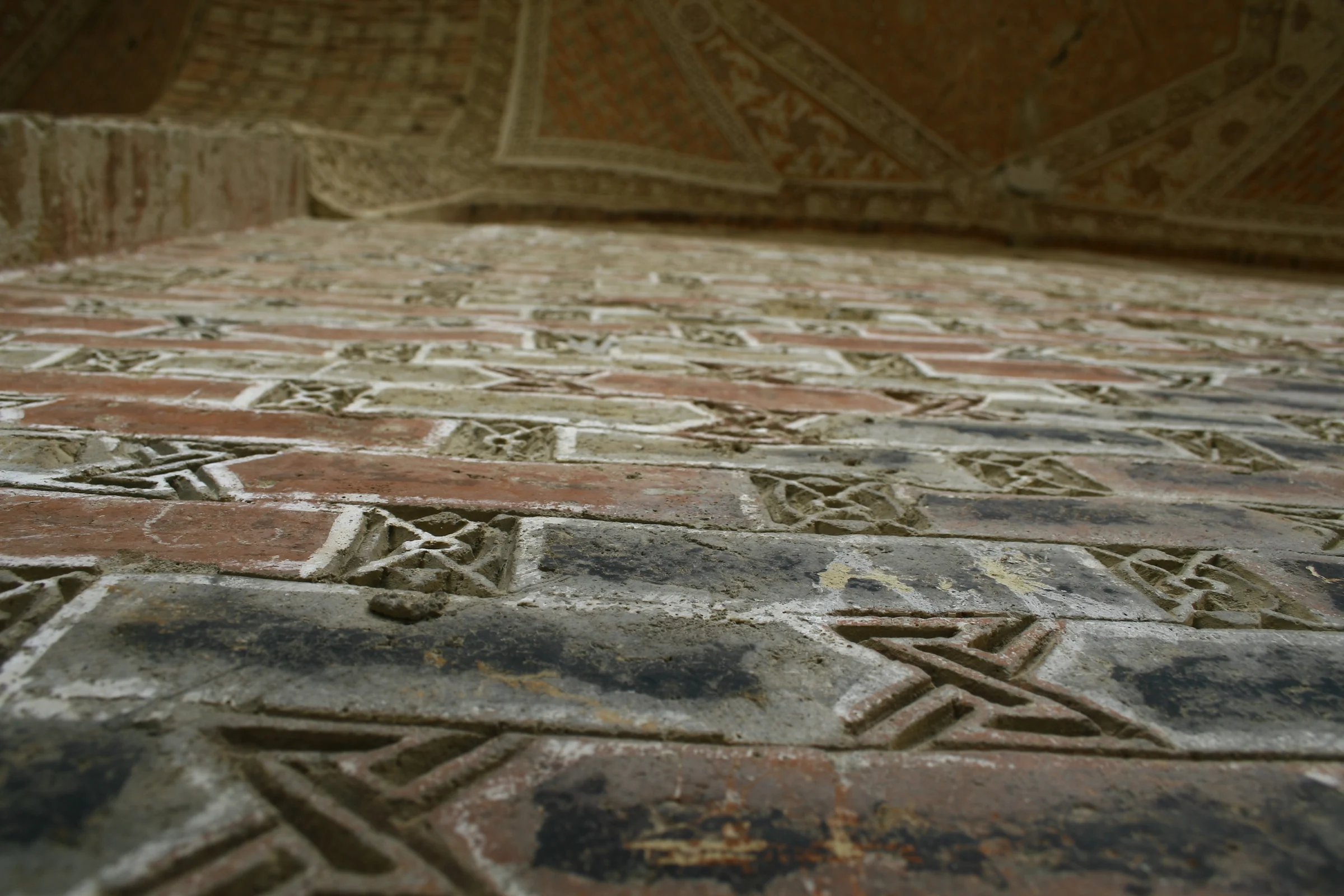
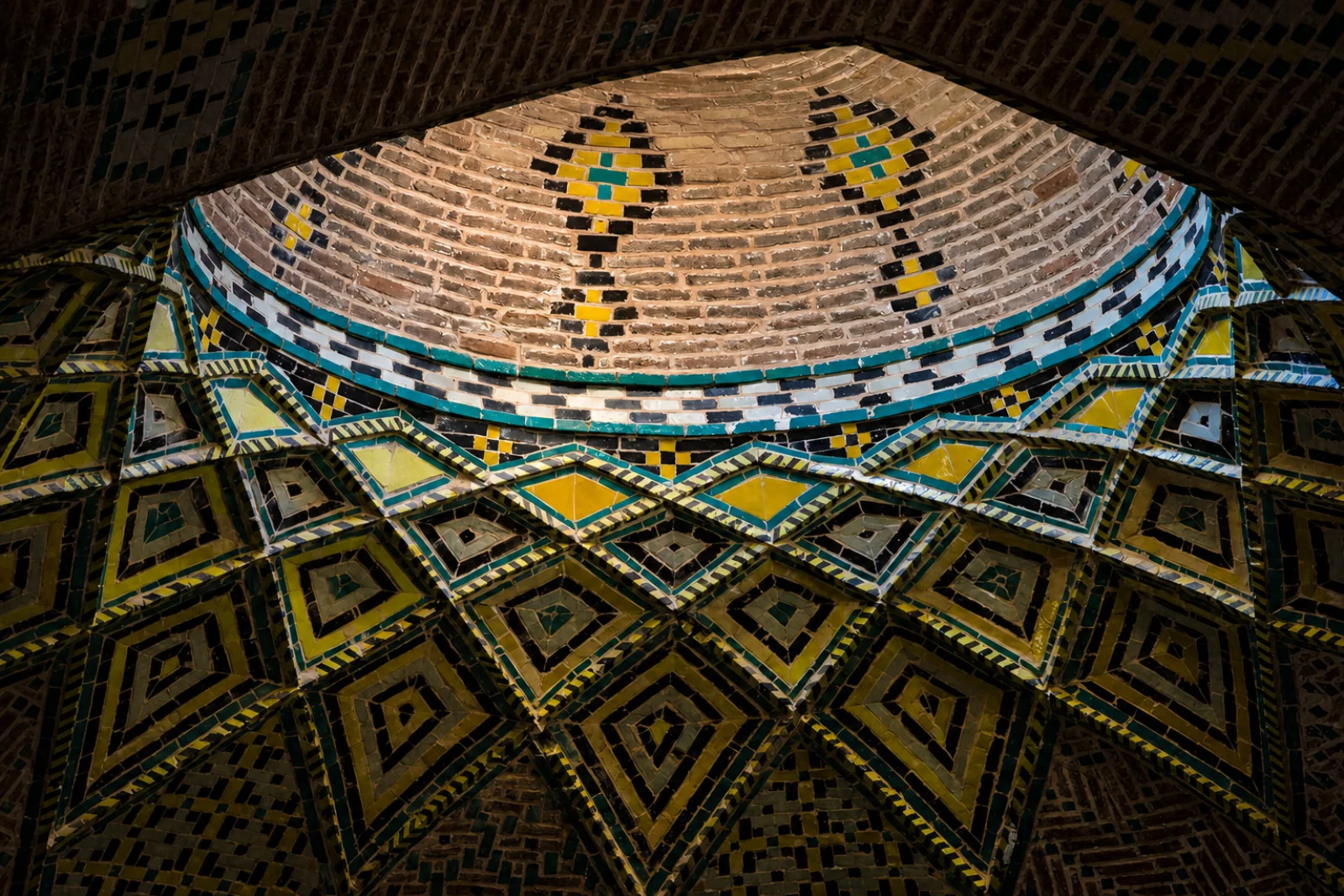
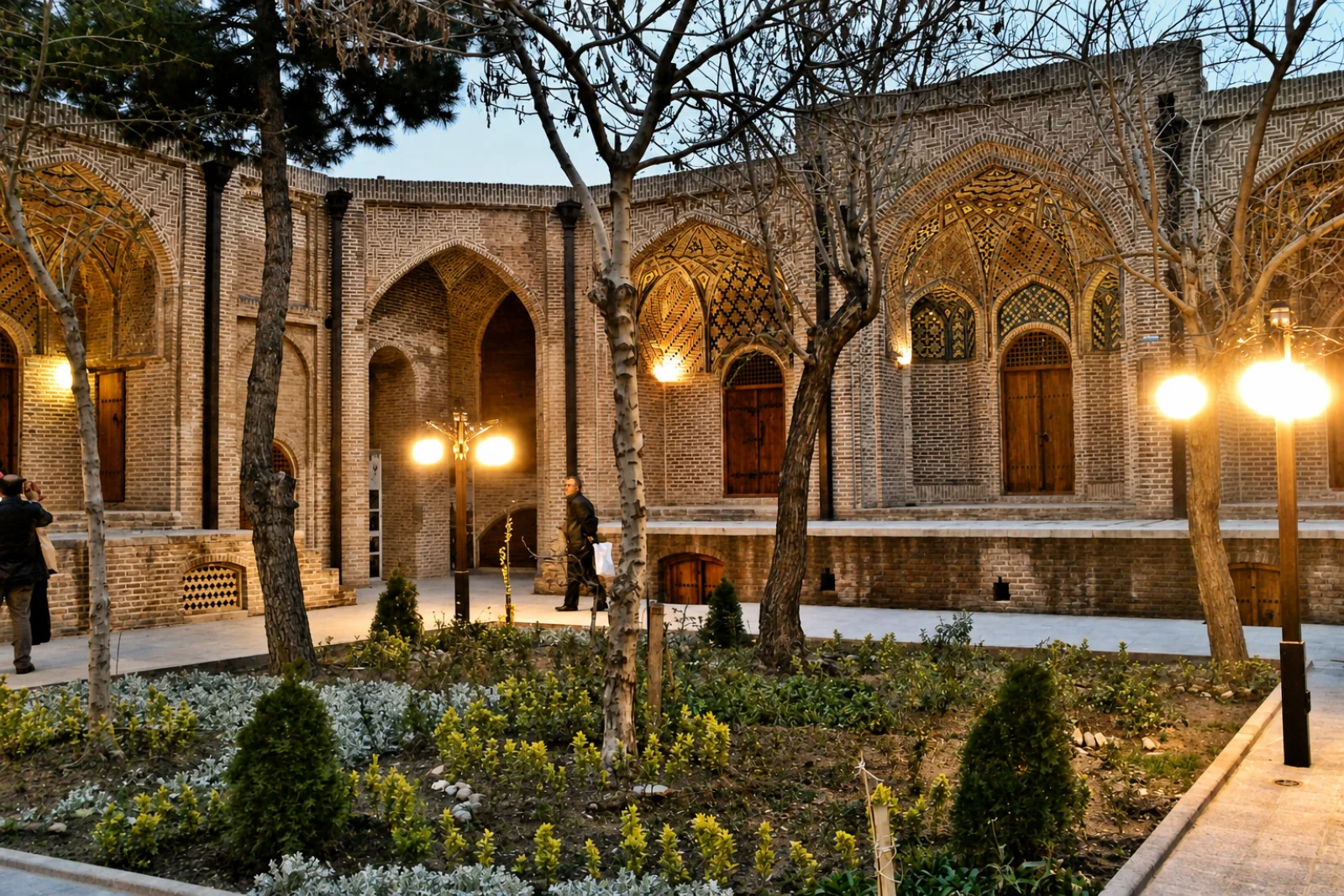
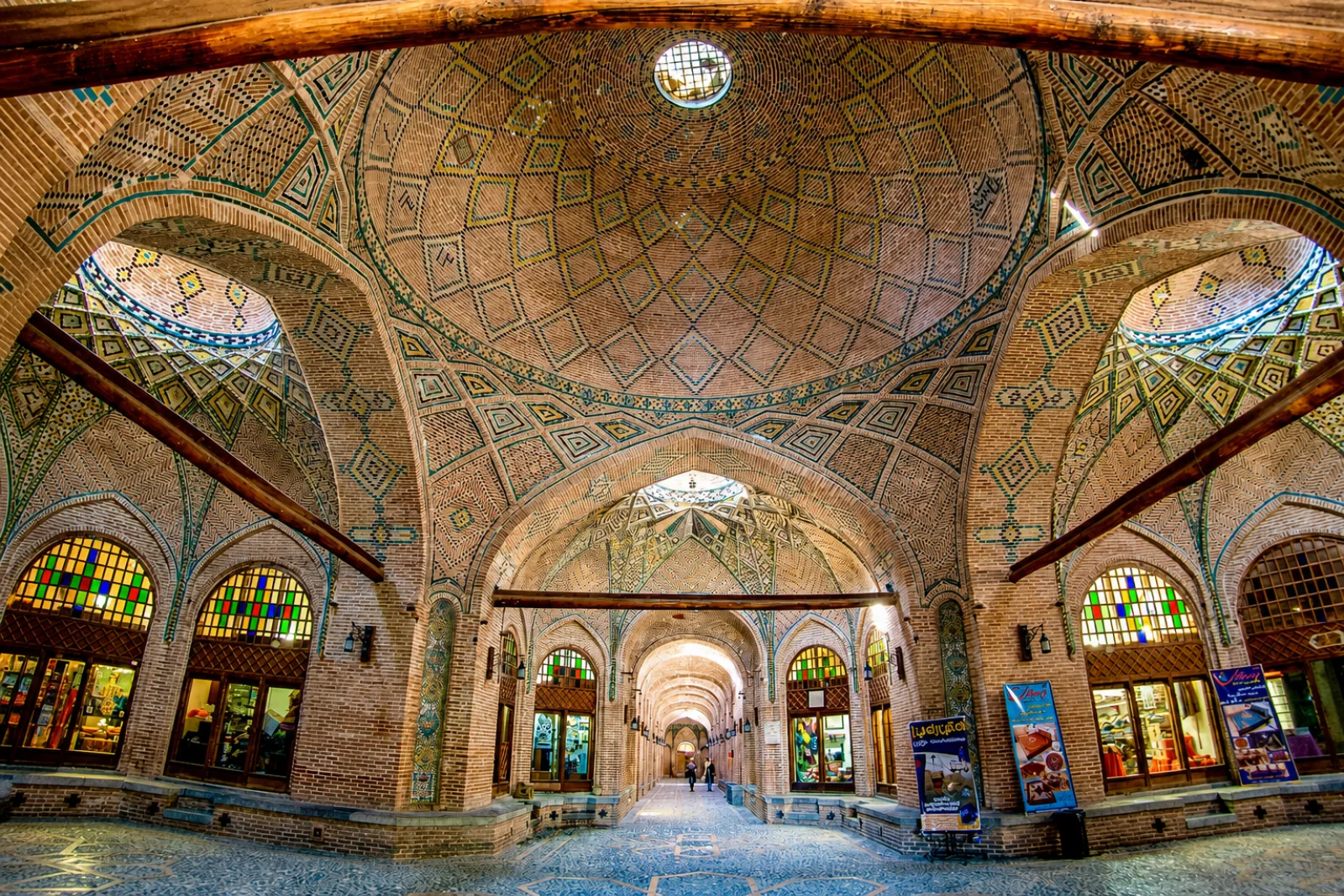
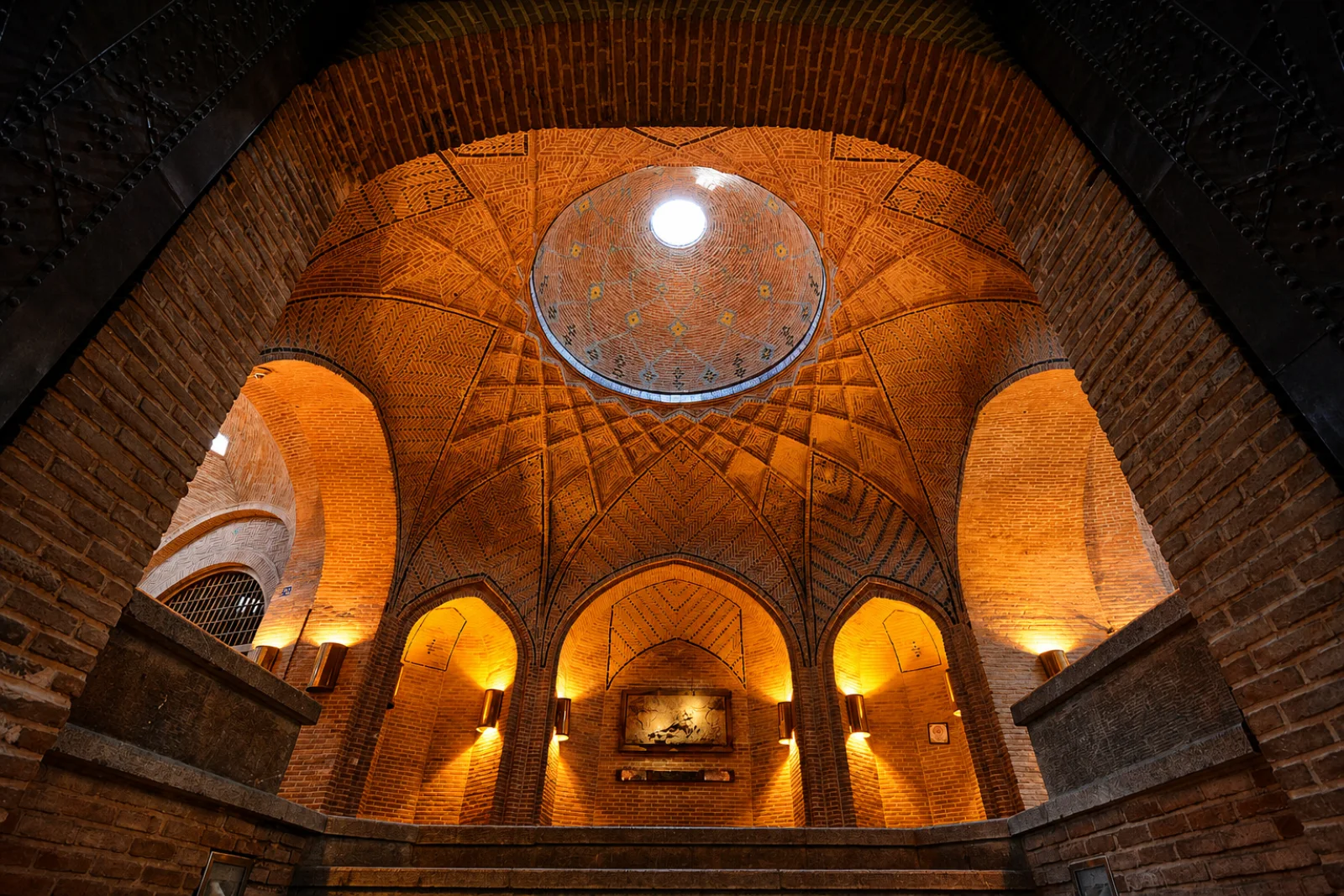
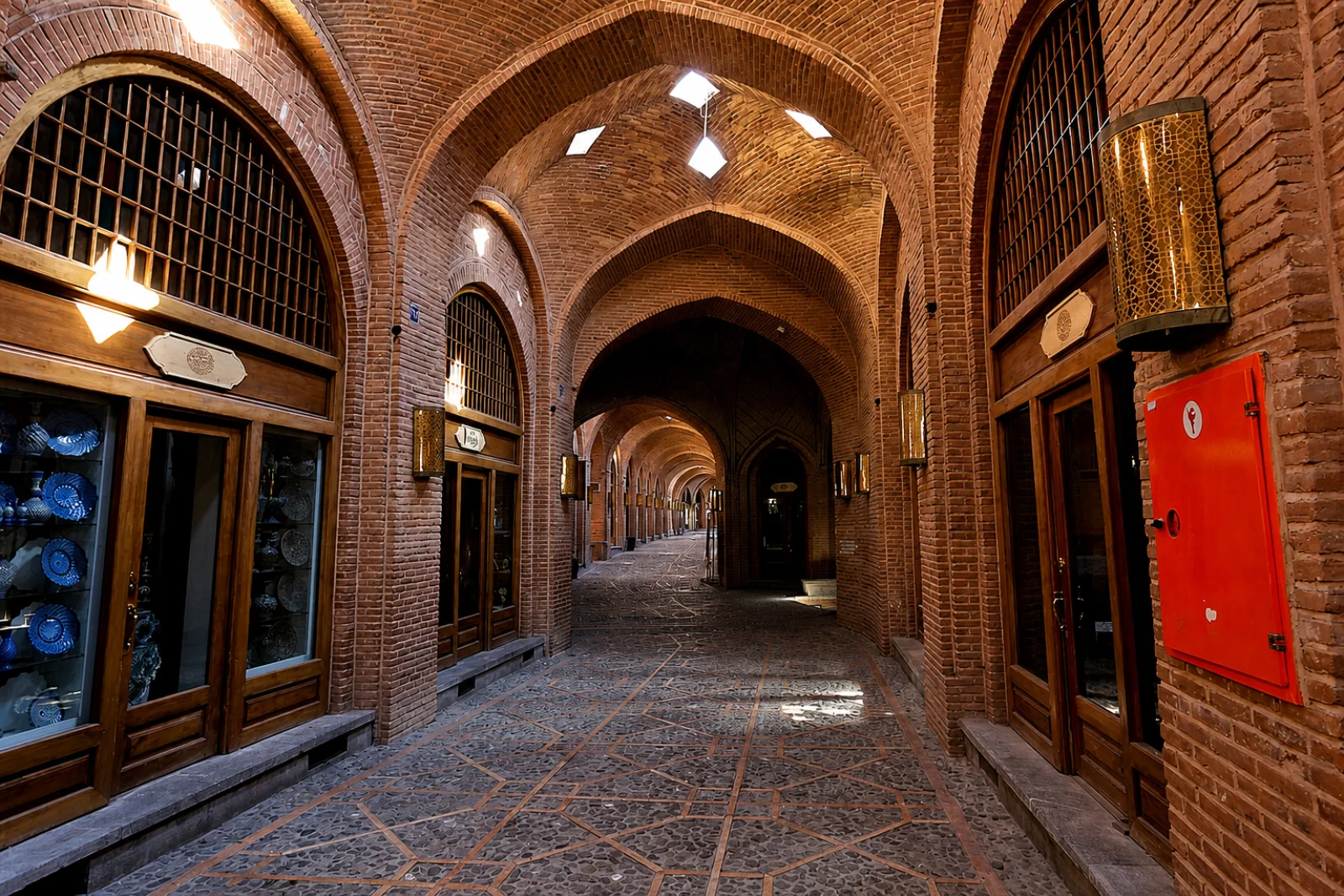
The architecture unfolds through interconnected brick-vaulted passages, courtyards and rows of chambers. Arcaded courtyard fronts contrast with the enclosed trading corridors, while the chaharsuq—the domed crossing of market passages—provides a particularly striking interior. Openings in the vaults admit daylight, drawing attention to the geometry of the brickwork. The alternation between shaded passages and open courts makes the building’s organisation as interesting as its individual decorative details.
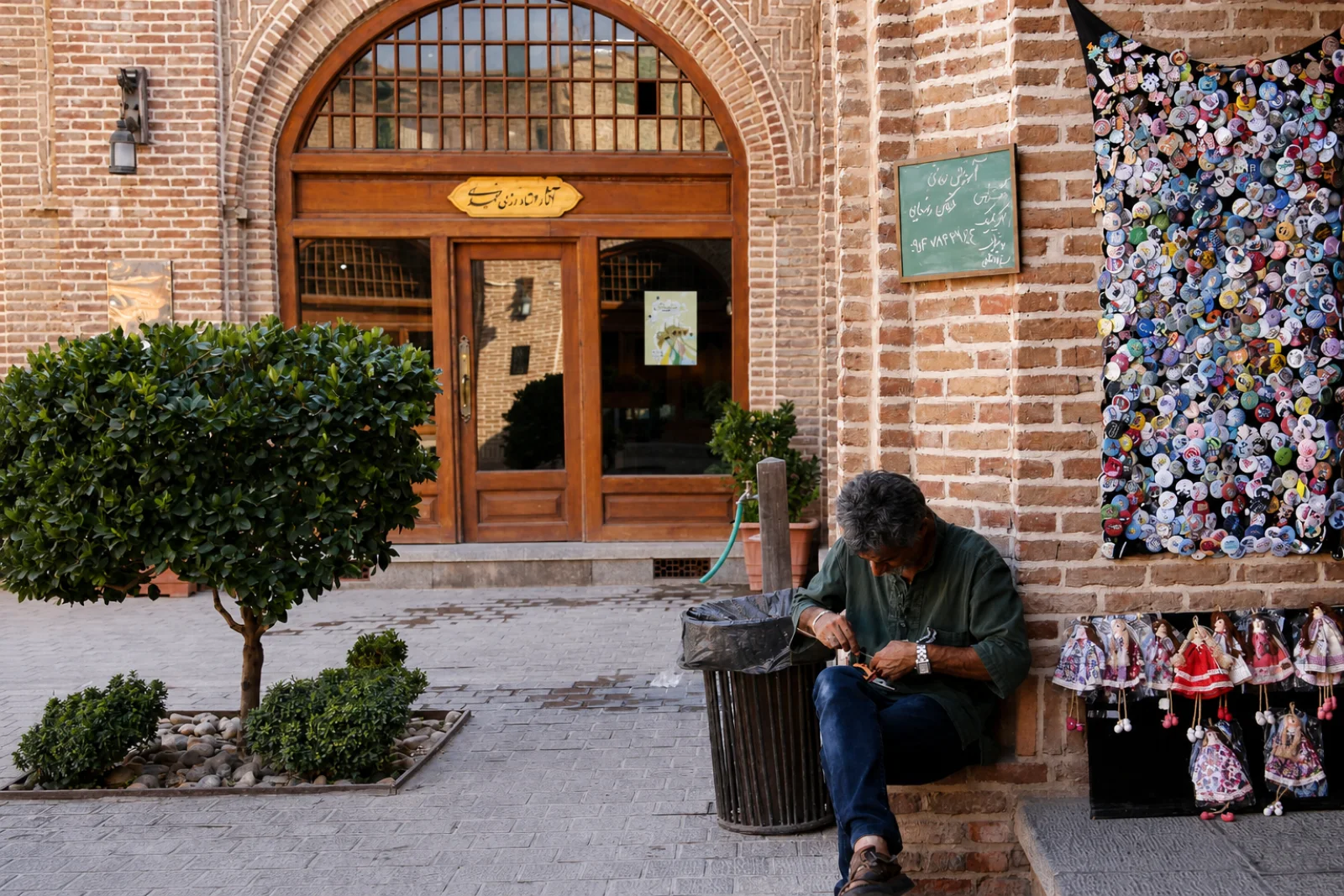
Restored spaces now accommodate craft shops, galleries and cafés, bringing contemporary activity into the former merchants’ quarters. A visit is best approached as an exploration of the whole complex rather than a search for one principal façade: look at how entrances, chambers and courtyards connect. Together with the neighbouring bazaar, the caravanserai gives a tangible sense of Qazvin’s history as a centre of trade. Current access arrangements and individual businesses’ opening hours require confirmation.
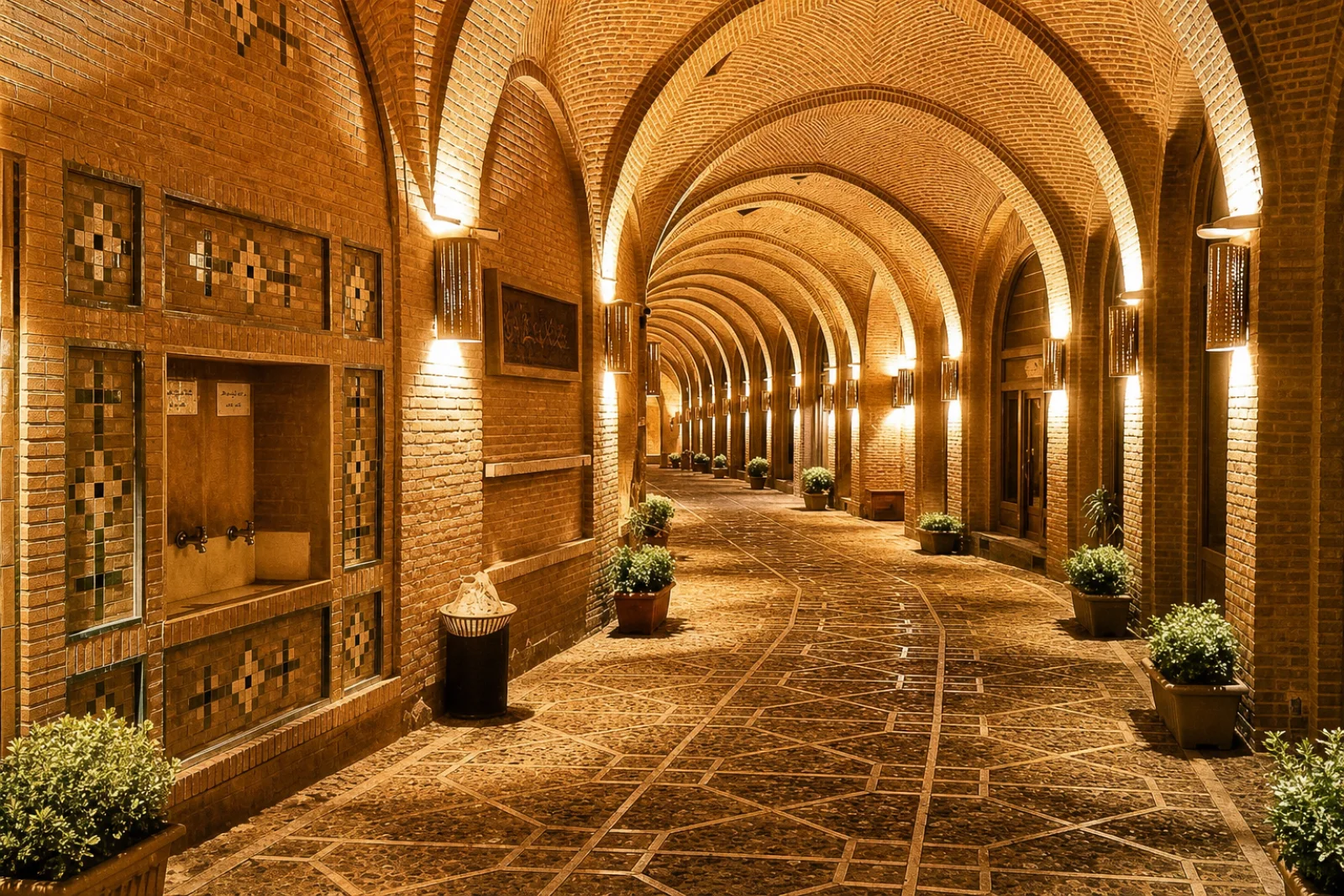
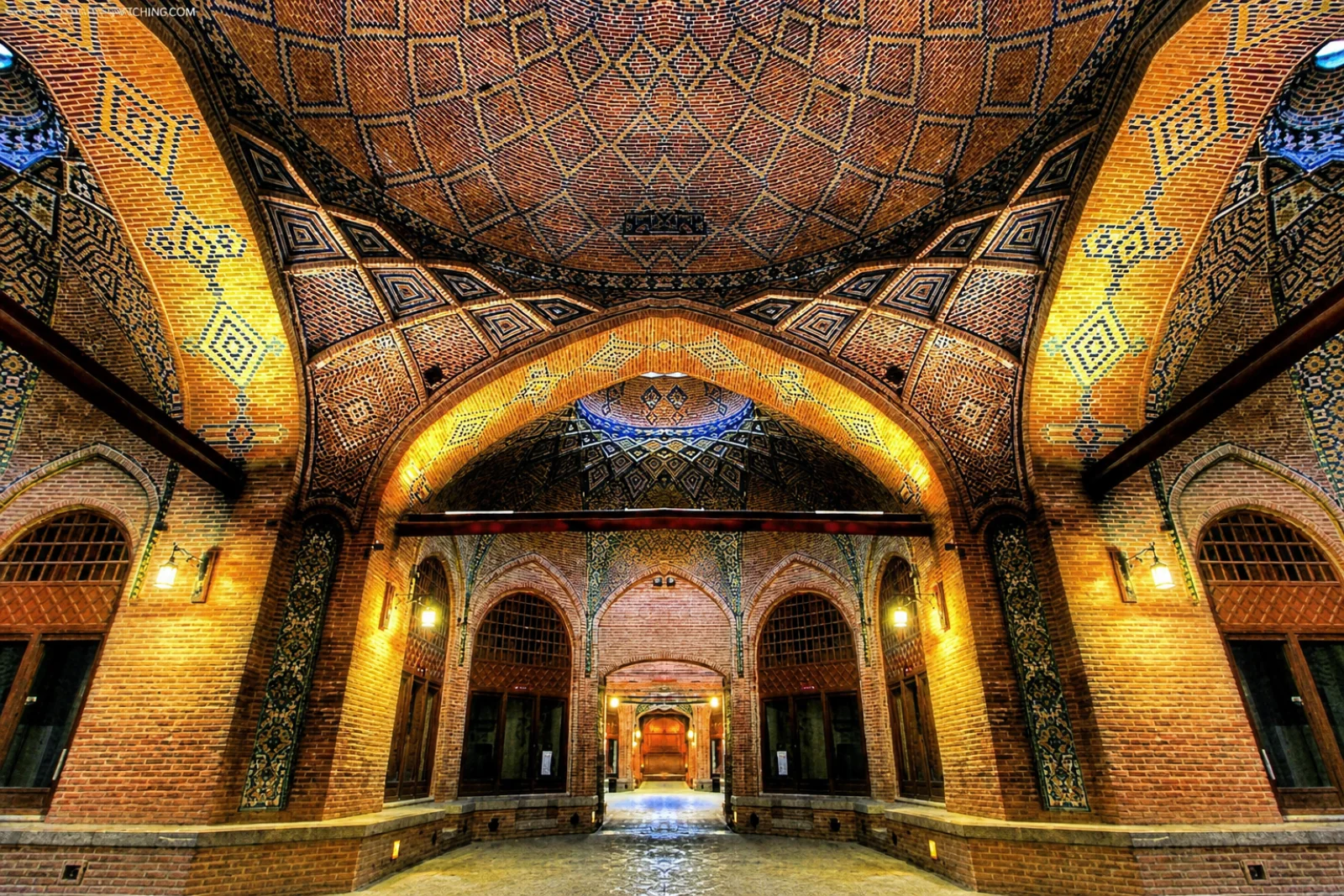
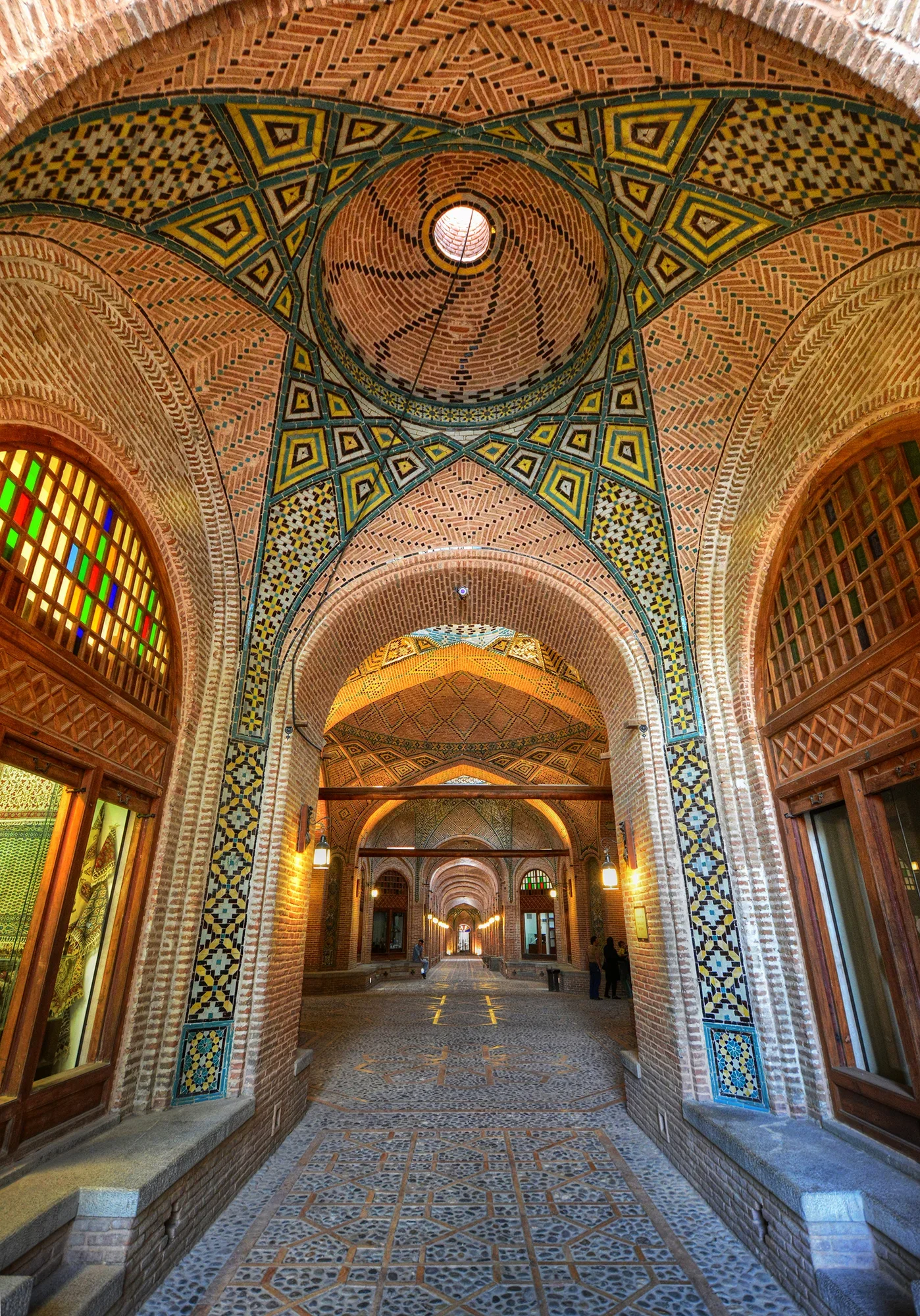
A Glimpse Into Sad al-Saltaneh Caravanserai
See Sad al-Saltaneh Caravanserai Through Moments
Visitor Information
Essential Information for Visiting Sad al-Saltaneh Caravanserai
Look for the caravanserai’s brick vaulting, courtyards and interconnected passages—take a moment to step away from the busier corridors to appreciate the geometry and light.
If you’re interested in shopping or workshop activity, you may find small craft and retail units on-site or nearby, but what’s open can vary by day and season—treat it as a working commercial area, not a museum.
In crowded bazaar sections, keep valuables secure and be mindful of handcarts and scooters where they appear; move to the sides of narrow corridors to let local traffic pass.
Some sources describe the site in heritage terms; if UNESCO / World Heritage status matters for your itinerary, confirm its current designation through an official or up-to-date channel before you rely on it.
Signature Tours including Sad al-Saltaneh Caravanserai
We Believe Your Journey Through Sad al-Saltaneh Caravanserai Should Be Personal.
No results found.
Frequently Asked Questions about Sad al-Saltaneh Caravanserai and Nearby Attractions
Sad al-Saltaneh Caravanserai is a restored Qajar-era trading complex in Qazvin, known for its brick-vaulted passageways, courtyards, and domed intersections. Rather than a single exhibition to follow in sequence, it is a place to explore on foot, combining historic architecture with craft shops, galleries, and cafés.
Allow roughly one to two hours for an unhurried visit, or longer if you want to browse and stop for refreshments. Look up at the brickwork and vaulted ceilings, then step into the courtyards to appreciate how the spaces connect. Comfortable shoes are useful, and sheltered passages make parts of the visit manageable in strong sun or light rain, although moving between sections may involve going outdoors.
Shop and café opening times can vary, so confirm locally if a particular business or exhibition is important to you. Ask before photographing people or shop interiors, and carry some local cash for small purchases. You can also combine the caravanserai with a walk through Qazvin’s historic bazaar area, leaving time to explore rather than treating it as a quick photo stop.
For architectural photography at Sad al-Saltaneh Caravanserai, look for compositions that connect its brick vaults, passageways, and courtyards. Doorways and repeating arches provide natural frames, while including a person—with permission—can help convey the scale of the spaces.
The contrast between shaded interiors and brighter courtyards can be challenging for phone cameras. Try exposing for the brightest brickwork you want to preserve, keep the camera steady in dimmer passages, and avoid using flash around displayed goods or other visitors.
Ask before photographing shop interiors, merchandise close-ups, or identifiable people, especially craftspeople at work. A purchase does not automatically imply permission to take portraits, so a polite request remains worthwhile.
For tripods, lighting equipment, or a commercial shoot, check with site management before setting up, as permissions may differ from those for casual photography. Keep entrances and narrow passages clear, and follow any posted restrictions or instructions from staff.
Make Sad al-Saltaneh Caravanserai the anchor of a walking route through central Qazvin, pairing it with the historic bazaar and Chehel Sotoun Palace. This keeps the outing geographically focused while bringing together the city’s trading heritage and its period as a Safavid capital.
Start at Chehel Sotoun for historical context, then explore the bazaar before spending time at the caravanserai. Alternatively, reverse the order if shopping is a priority, since individual traders may follow different schedules; confirm locally rather than assuming every shop will be open.
Allow roughly half a day for an unhurried outing, with room for browsing and a refreshment stop rather than a tightly timed checklist. Check current access arrangements for Chehel Sotoun separately, and use a saved map to navigate between landmarks without treating every bazaar passage as a through-route.
When shopping at Sad al-Saltaneh Caravanserai in Qazvin, compare a few shops before choosing a craft or souvenir. The historic setting is part of the appeal, but it does not establish where an item was made or whether it is handmade. Ask the seller who produced it, which materials were used, and whether it was made locally.
For textiles, examine the stitching, edges, and finish; for ceramics, check for chips or cracks and ask whether decorative pieces are suitable for food use. If local craftsmanship matters to you, ask whether the seller can explain the making process or identify the workshop. Discuss prices politely rather than assuming every shop expects bargaining.
Before paying, confirm the accepted payment method and ask how fragile purchases will be packed. Keep the seller’s contact details and any receipt, especially for higher-value items. For antiques or objects described as historically significant, check applicable export and import requirements before committing to a purchase.
Sad al-Saltaneh Caravanserai in Qazvin is a Qajar-era commercial complex that reveals how trade shaped the city’s architecture. Unlike the isolated roadside caravanserai many travelers imagine, it belongs to an urban trading environment, with interconnected courtyards, covered passages, and rooms serving commercial needs.
To understand its layout, follow the transition from enclosed, vaulted corridors into open courtyards. These contrasting spaces helped organize circulation and trading activity while providing different degrees of shade, shelter, and ventilation. Look particularly at the brick vaults, repeated arches, and openings that bring daylight into the covered interior.
The domed intersections are especially revealing: pause where passages meet and look upward to see how the brickwork spans a wider space. Then compare those junctions with the smaller bays around the courtyards; the contrast makes the complex easier to read as a working commercial network rather than simply a collection of decorative buildings.
Sad al-Saltaneh Caravanserai may be manageable for some visitors with limited mobility, but do not assume there is a continuous step-free route throughout the historic complex. Its courtyards and connecting passages offer scope for a selective visit rather than a complete circuit, depending on your needs and the conditions on the day.
Before visiting, ask your accommodation or a local guide to check which entrance offers the easiest access and whether your intended route involves steps, raised thresholds, or uneven paving. Wheelchair users should also confirm doorway clearance and accessible toilet provision; an entrance described as accessible does not necessarily mean every shop, café, or courtyard is equally easy to reach.
Plan a flexible route with rest stops, and check that any café you intend to use has suitable seating and access. If walking distance or prolonged standing is a concern, focus on a smaller section and arrange a convenient pickup point outside the complex.
Allow one full day for Qazvin’s historic center, or two days if you prefer a slower pace with time for museums, cafés, and the bazaar. The city is compact enough to explore several central sights on foot, although occasional taxi rides can make the day more comfortable.
For a first day, combine the restored Sa’d al-Saltaneh caravanserai with the adjoining bazaar area, then visit Chehel Sotoun, a surviving pavilion from Qazvin’s period as a Safavid capital. Leave room to wander rather than treating every stop as a quick photo opportunity; much of the appeal lies in the brick arcades, courtyards, and working market streets. Confirm museum access and any visiting restrictions locally, especially around holidays.
If Alamut Castle is on your list, plan it as a separate full-day excursion rather than adding it to a city sightseeing day. Mountain-road travel and the uphill approach make it a more demanding outing, so check weather and access conditions and arrange suitable transport before setting out.
Yes—Qazvin’s historic center is well suited to exploring on foot, especially around Sabzeh Meydan, Chehel Sotoun Palace, and the bazaar district. Start near the square, visit the palace, then continue toward Sa’d al-Saltaneh Caravanserai and the adjoining market lanes. This makes a practical walking route without repeatedly crossing the city.
Expect a mixture of paved streets, covered passages, steps, and occasionally uneven surfaces rather than a consistently pedestrianized route. Wear comfortable shoes and take care at road crossings, where traffic can make short distances feel less straightforward. In hot weather, walk outdoors earlier in the day and use the covered bazaar passages for a shaded break.
A taxi is useful for sights farther from this central cluster, particularly if heat, fatigue, or mobility needs make longer walks uncomfortable. Excursions to Alamut Castle and the surrounding mountain landscapes require separate transport planning; they are not extensions of a city walking route.
Qazvin’s signature dish to look for is gheymeh nesar, a festive rice dish typically made with lamb or beef, barberries, slivered nuts, and fragrant citrus peel. Unlike the stew commonly called gheymeh elsewhere in Iran, it is usually presented as rice topped or layered with meat and garnishes. It makes a good introduction to the city’s cooking, though recipes and presentation vary between restaurants.
For something sweet, try nan-e berenji, delicate rice-flour biscuits, or baklava in local pastry shops. Qazvin is also known for its assortment of small traditional sweets, which pair well with tea and are practical purchases to take away. Shops around the bazaar area are useful places to compare selections; ask which items are made locally and which travel best.
If you have food allergies or dietary restrictions, ask about ingredients rather than relying on a dish’s appearance. Nuts are prominent in gheymeh nesar and many sweets, while rice dishes may contain meat stock or animal fat even when meat is not obvious. For the best chance of finding a particular specialty, ask your accommodation or a local restaurant whether it is available that day.
Spring and early autumn generally offer the most comfortable weather for visiting Qazvin, especially if you want to spend time in its historic streets, courtyards, and gardens. These seasons tend to avoid the strongest summer heat and winter cold, though spring weather can be changeable and evenings may still feel chilly.
In summer, plan outdoor sightseeing for earlier or later in the day, with museums, covered bazaars, and rest breaks during the hottest hours. Winter can suit travelers who do not mind cold conditions, but pack warm layers and footwear with good grip, as snow or ice may affect walking and road travel.
If your visit includes an excursion into the Alamut region, check mountain weather and road conditions separately rather than relying on Qazvin’s city forecast. Around Nowruz, the Persian New Year in March, domestic travel can increase demand for accommodation, so booking ahead is sensible; confirm holiday schedules directly with individual sights.